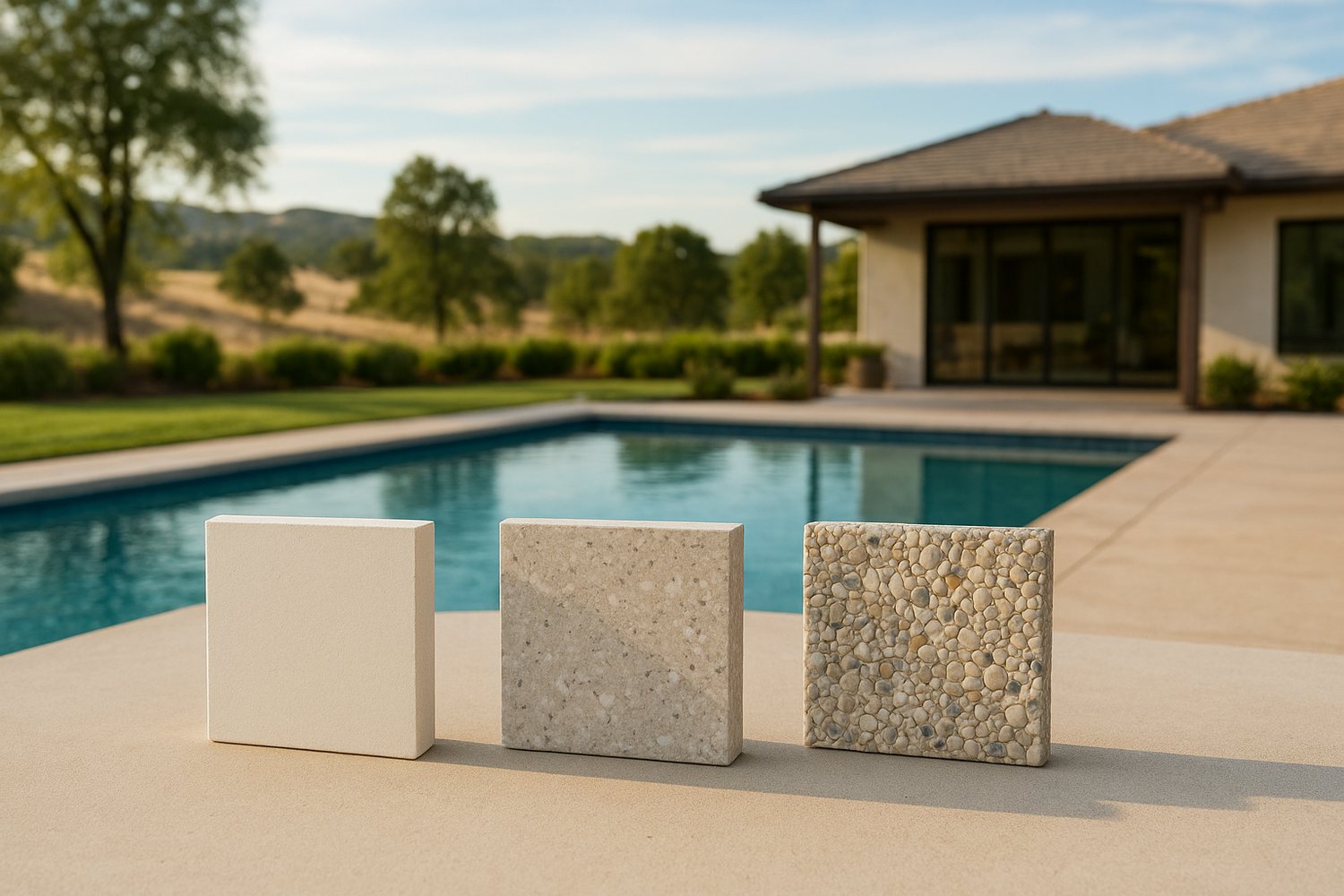
Plaster, Quartz, or Pebble? Comparing Pool Interior Finishes
Choosing a pool interior finish is a key part of building the perfect backyard pool. Learn about plaster, quartz, and pebble options for lasting beauty and performance.
Every pool finish offers a blend of beauty and function. Here’s a region-specific, clear-eyed look at plaster, quartz, and pebble finishes for your custom pool.
Understanding the Importance of Pool Interior Finishes
The finish inside your pool isn’t just about looks—it’s what you see and touch every time you swim. In the Sacramento, Placer, and El Dorado County climate, your interior finish faces long, hot summers, cool winters, and plenty of use through the outdoor living season. It’s important to choose a finish that will feel great underfoot, stand up to our region’s sun and water chemistry, and let the rest of your backyard features shine.
Your pool’s finish also sets the tone for your yard. Whether you’re drawn to a classic, bright look or something more textured and contemporary, the material you choose—plaster, quartz, or pebble—can influence your pool’s ambiance and the water’s color. If you’re working with other hardscape surfaces, your pool’s interior finish is a big part of your overall design.
Beyond visuals, think about longevity and care. Regional pool owners deal with hard water and temperature swings, which can impact surfaces over time. Choosing the right finish upfront can help minimize repairs, manage water chemistry, and simplify long-term maintenance for years of enjoyment.
• Finish impacts both style and comfort
For more details on specific products and surface options, visit ourPool interior finishes and tilepage.
Classic Option: Standard Plaster Pool Finishes
Basic white or colored pool plaster is the traditional choice for custom pools throughout Rocklin, Roseville, and nearby areas. Plaster is smooth to the touch and creates a clean, timeless look—perfect if you want a classic blue pool or want the most cost-effective finish at installation. It’s a blend of white cement, sand, and water, troweled to a smooth finish.
Plaster’s strength lies in its simplicity and affordability. Maintenance is straightforward, and light brushing usually keeps plaster looking fresh. However, its porous nature means it is more prone to staining, discoloration, or etching from unbalanced water chemistry or mineral-heavy local water. Owners should expect to refinish every 7–10 years depending on care.
If you lean classic and don’t mind a future refinish, plaster is still a viable choice for Sacramento-area pools. Just keep in mind that it’s less forgiving of chronic hard water or chemical fluctuations compared to newer finish technologies.
• Smooth, comfortable texture
Upgrade Choice: Quartz Pool Finishes
Quartz pool finishes combine crushed quartz with strong cement and pigments, resulting in a surface that’s harder and denser than plain plaster. This option offers increased resistance to chemical imbalances and local mineral content, which can be especially helpful in our region’s water conditions. Quartz finishes often include colored aggregate for extra sparkle and color options.
Many homeowners in Granite Bay and Folsom choose quartz for its blend of durability and vibrant appearance. The quartz crystals help the finish resist stains, fading, and etching, offering a longer functional life than plaster. Texture-wise, it’s nearly as smooth as plaster but with a subtle, pleasant texture underfoot.
Quartz can be a logical step up if you want a finish lasting a decade or more with proper care. You’ll get a touch of shimmer, more color depth, and practical benefits without a dramatic jump in price or maintenance needs.
• Resistant to stains and fading
| Finish | Texture | Lifespan | Maintenance | Visual Options |
|---|---|---|---|---|
| Plaster | Smooth | 7–10 years | High | Classic, subtle color |
| Quartz | Smooth with sparkle | 10–15 years | Moderate | Bright color, light shimmer |
| Pebble | Textured | 15+ years | Low-medium | Natural, dynamic color |
Premium Experience: Pebble Pool Finishes
Pebble finishes are made by blending smooth river pebbles or glass beads with a strong cement base, then exposing those pebbles for a textured effect. This finish tops the list for durability and natural beauty. It’s popular in Auburn, Granite Bay, and upscale Roseville homes for its luxurious look and ability to harmonize with stone patios or natural landscapes.
The big advantages of pebble are its exceptional longevity and resistance to stains, discoloration, and hard water effects. The pebbles shield the cement, so the pool surface stands up better to heat, heavy use, and chemical swings. Texturally, pebble is slightly rougher underfoot than plaster or quartz, though smaller pebble sizes and glass bead finishes can feel quite smooth.
While pebble finishes cost more upfront, their robust performance and stunning visual potential make them a favorite for luxury custom pools in our area. They can easily last 15+ years with proper care and maintenance.
• Natural, high-end look
Visual Appeal: Color, Sparkle, and Water Tone
One of the biggest deciding factors between plaster, quartz, and pebble finishes is how they look in your yard’s light. Standard plaster produces a bright, uniform water color—typically sky blue for white plaster or deeper hues for colored options. If you want a truly classic pool look, plaster is still the benchmark.
Quartz finishes expand your options with more vivid colors and a touch of shimmer. They reflect sunlight differently, lending your pool a slight sparkle. This can highlight your pool in Rocklin’s sunny summers and complement modern or transitional homes.
Pebble finishes are the most visually dynamic, with their depth, natural tones, and ability to set a lagoon-inspired or upscale resort mood. The size, color, and blend of pebbles will directly influence the water’s appearance and interact beautifully with stone, tile, and landscape materials.
See our complete overview ofCustom Poolsoptions for even more ways to make your backyard vision a reality.
Maintenance Needs: What Homeowners Should Expect
Maintenance is a reality with any pool interior finish, but each type has its quirks. Plaster needs relatively frequent brushing to avoid algae and staining, especially in our region’s mineral-rich water. It’s also more prone to cosmetic flaws from fluctuating pool chemistry.
Quartz finishes maintain their brilliance with less effort than plaster. They’re still easy to brush clean and resist some of the staining and fading ordinary in older finishes. That means you’ll spend less time scrubbing and more time enjoying the pool.
Pebble surfaces require regular brushing and occasional deep cleans but can hide minor discoloration thanks to their texture and mottled color. Their excellent resistance to chemical damage gives you extra peace of mind during busy summer swim seasons.
• All finishes benefit from balanced water chemistry
Cost, Longevity, and Value: What to Consider
Standard plaster is usually the most budget-friendly to install, but you may need to refinish it sooner depending on your water’s chemistry and how you care for it. Expect a typical refinish every 7–10 years, or sooner if water conditions are rough.
Quartz finishes offer a nice step up in lifespan—often 10–15 years—without major up-front cost increases. Their color retention and low-maintenance nature can offset the difference over time, especially in homes where pools see daily summer use.
Pebble, while commanding the highest initial price, delivers the greatest longevity and lowest risk for visible flaws from hard water or chemical upsets. Many local homeowners weigh up front cost against the finish looking newer, longer, and requiring fewer repairs or resurfacings.
Tile Options for Pool Interiors and Accents
While most pool interiors use plaster, quartz, or pebble, tile can be a premium option for waterlines and accent features. Glass, porcelain, and stone tiles add a custom touch and are common choices for homeowners wanting crisp lines or artistic mosaics around steps, benches, or spas.
Tiles are the most durable choice where sun, water, and abrasion meet. They resist fading, staining, and pool chemical effects better than almost any other surface. However, the grout does need periodic maintenance to remain watertight and looking sharp.
Incorporating tiles as a trim or accent works especially well with pebble or quartz, helping define your pool’s shape and style. With the breadth of colors and finishes available, you can match your pool to other hardscape features for a coordinated outdoor living space.
• Waterline tile protects against sun and scum lines
Ready to talk about your project?Request a consultationwith our team today.
Planning a custom pools project?
Call or text 916-741-0633, or email sales@californiahardscapes.com with your address, a short description and a few photos, and we will arrange a consultation.