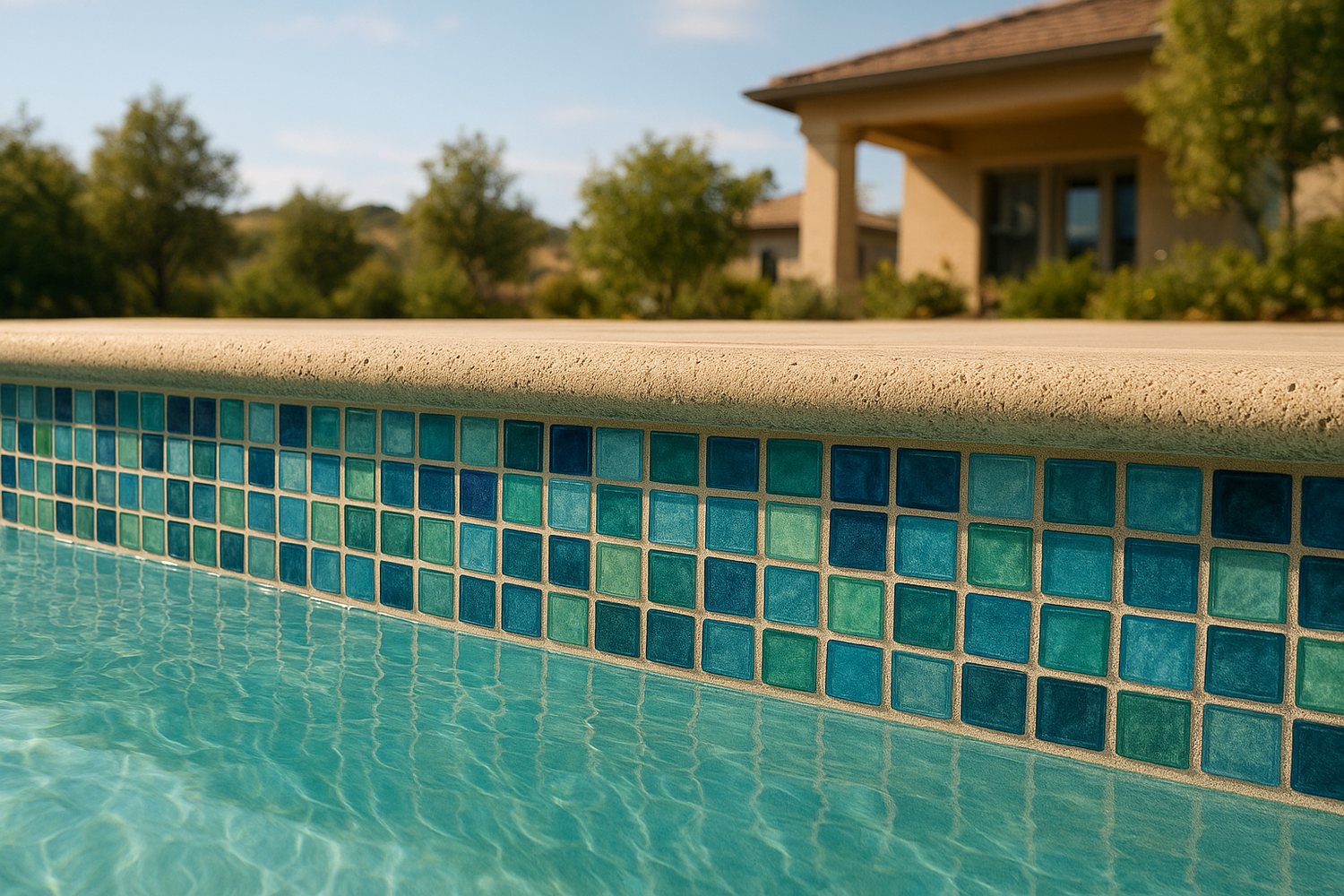
How Pool Finish and Tile Colors Transform Water Design
Finish and tile colors create the look and feel of your backyard pool. Learn how shade, material, and style of pool interiors affect water color and design.
The finish and tile you choose for your custom pool do more than protect surfaces – they define the water’s appearance. Knowing how color, depth, and material interact helps you achieve the perfect look for your California backyard.
Why Pool Finish and Tile Matter for Water Color
The surface color beneath pool water determines much of your pool’s overall vibe. Pool interior finishes—plaster, aggregate, or tile—set the background, while accent tiles at the waterline and steps add style. Homeowners in Rocklin, Roseville, and nearby communities often notice that even subtle color changes can shift the entire look and mood of the pool.
Pool water itself is naturally clear; what you actually see is the color reflected off the interior surface, altered by the sunlight and shadows cast across it. A white or light gray finish creates that classic light-blue, Caribbean effect. Deeper blues or darker greys make the water look like a mountain lake or a cool, modern retreat.
Tile brings another design layer: it frames the water surface, introduces patterns, and highlights steps or benches for both safety and visual impact. The right combination plays with the subtle changes in daylight and works with surrounding hardscape and landscaping for a cohesive outdoor space.
Explore more finish and tile advice on ourPool interior finishes and tilepage.
When to Go Light (or Bright): Classic Blue Water
For a traditional, sparkling pool, many local homeowners still gravitate toward light finish colors. White plaster or pale quartz blends with sunlight to produce that familiar bright blue water—especially in the full daylight you get in Placer and Sacramento County summers. This option pairs well with lighter decking and creates a timeless backyard centerpiece.
If you prefer a more modern but still bright look, try pale grey or soft blue aggregates. Even a subtle shift in undertone can make your pool water appear more sky blue or even turquoise. Accent tiles in ocean blue or cobalt highlight the waterline without competing for attention.
Light finishes also help keep pool surfaces cooler underfoot, an important comfort consideration during hot spells. Just be aware that lighter shades tend to highlight debris and minor staining more than darker finishes.
- Light colors equal lighter, brighter water
- Works well with sun-drenched yards
- Makes smaller pools feel larger
Deep, Dramatic Waters: The Impact of Darker Finishes
Dark blues, charcoals, and even black are popular for creating a deeper, more tranquil water color—think Northern California lakes or contemporary resorts. In shaded or tree-lined areas of Rocklin, Granite Bay, and Folsom, these tones can give the pool a bold, mirror-like presence.
Darker finishes absorb more sunlight, which can help slightly raise water temperature during cool evenings. They also tend to conceal leaves and debris, giving you a more forgiving surface between cleanings.
Tile selection with dark interiors offers a chance to make metallic, glass, or mosaic tiles pop against the richness of the water. Contrasting tile edges on steps and benches not only add artistry but also improve visibility and safety for swimmers.
- Darker interiors = deep blue or emerald water
- Disguises debris; less frequent touch-ups
- Adds a modern, luxurious feel
| Finish Type | Water Color Effect | Durability | Maintenance | Notes |
|---|---|---|---|---|
| Standard Plaster | Bright blue, light water | Moderate | Frequent | Budget-friendly, smooth, can stain |
| Quartz/Color Aggregate | Richer blues, sparkles | High | Average | Hides stains, customizable, slight texture |
| Pebble Aggregate | Natural, vibrant, deep water | Very high | Low | Popular in region, slip-resistant |
| All-Tile | Custom, intense blue or green | Highest | Lowest | Luxury look, easy to clean, highest cost |
| Dark Plaster/Aggregate | Deep blue or emerald water | High | Average | Warms water, hides debris |
Waterline and Accent Tile: Design Beyond Function
While interior finish controls the background color, waterline and accent tile define the pool’s style. Local choices often reflect the region’s natural stone and subtle earth tones, or crisp modern glass and mixed mosaics for dramatic contrast. These tiles create a break between pool and coping, drawing the eye without overwhelming the surrounding space.
Waterline tiles can cool a bright finish with subtle grays, play off golden sunlight with tan travertines, or add a shock of blue to echo the Sierra foothills skyline. Step and bench tiles offer both style and practical visibility, especially in pools with variable depth or kids playing.
When choosing tile, consider slip-resistance and texture—these matter for safety with bare or wet feet. And remember, smaller mosaic formats create a more intricate look but may require more grout maintenance in our summer climate.
- Tile color frames the water’s tone
- Textured tiles improve traction
- Earthy tones feel natural in California landscapes
Common Finish Materials: Pros and Cons
Choosing among the three main pool interior finishes—basic plaster, pebble/aggregate, or all-tile—depends on both design goals and practical needs. Standard plaster is most cost-effective, delivering a smooth feel and that classic blue water effect. Upgraded aggregate blends, using colored quartz or pebbles, create richer color and texture.
Aggregate finishes are popular in Sacramento and El Dorado Counties for their durability, range of shades, and slip-resistance. All-tile interiors represent the pinnacle of custom pools: visually stunning and long-lasting, but require a bigger investment and specialized craftsmanship.
Consulting with a local pool builder helps match your expectations and maintenance preferences to the right surface. Your finish choice will shape the look, warmth, and upkeep of your pool for years to come.
- Plaster: classic look, smooth feel
- Aggregate: customizable colors, textured, hides flaws
- Tile: highest luxury, endless design options
Looking for design inspiration? See all possibilities on theCustom Poolsoverview hub.
Regional Factors: What Works Best in Our Area
Placer and Sacramento County homes experience a unique set of climate challenges—long, hot summers, cool nights, and occasional winter freezes. Material selection for finish and tile needs to account for local water chemistry, sun exposure, and day-night temperature swings.
Darker finishes fit well in shaded foothill yards and extend swimming comfort into early evening. Light finishes are better in all-day-sun yards, reflecting heat and helping keep both surface and water temp in check. Mosaic and porcelain tiles resist fading and efflorescence when selected for specific local pool chemistry and freeze-thaw conditions.
Work with a builder who understands the subtleties of water hardness, well water, and local maintenance demands. Selection isn’t just about the look—it’s about having your pool material hold up and look its best season after season.
- Ask about how finishes handle our hot, sunny summers
- Check tile frost resistance for landscaped or unheated pools
- Consider maintenance based on local water chemistry
Pairing Decking, Coping, and Pool Surface for Cohesion
A beautiful pool should never feel disconnected from your outdoor living space. In Rocklin, Roseville, and neighboring communities, matching—or thoughtfully contrasting—pool surface, tile, and hardscape creates harmony and flow. Gray and blue tones tie pools to modern concrete patios; sandy or stone finishes blend with flagstone, pavers, or decomposed granite.
Coping (the border or edge) also plays a major visual role. A pale or natural-tone coping can help soften a bold pool interior, while dark coping sharpens the modern edges of dramatic water features. Mosaic and glass tiles complement both classic and contemporary deck materials.
Plan to coordinate your pool’s finish and tile with plants, retaining walls, fire features, and lighting. The right mix turns your backyard into a true outdoor living environment, not just a place to swim.
- Create flow between pool finish, tile, and patio
- Use coping to highlight or balance finish colors
- Consider nearby landscaping elements for a seamless look
Get Hands-On with Samples and Expert Advice
Because finish and tile color are so affected by lighting and depth, it’s always wise to review samples outside at your home. Sunlight, shade, and reflected colors from your landscaping all influence how a color appears in your setting versus in a showroom.
Gathering a few sample tiles, interior finish swatches, and seeing them next to your planned hardscape materials helps make the final choice far easier. A custom pool builder familiar with Placer, Sacramento, and El Dorado County neighborhoods can explain which finishes hold up best and how they look season-to-season.
Don’t hesitate to ask about previous choices in your microclimate or get feedback from nearby homeowners. The right advice—and time spent viewing real-color samples under your yard’s sun and shadows—saves regrets and ensures a pool you’ll love for years.
- View samples outdoors at your site
- Ask for real-world finish comparisons
- Rely on local expertise for durability and beauty
Not sure where to start?Request a consultationand talk through options with Marty.
Planning a custom pools project?
Call or text 916-741-0633, or email sales@californiahardscapes.com with your address, a short description and a few photos, and we will arrange a consultation.