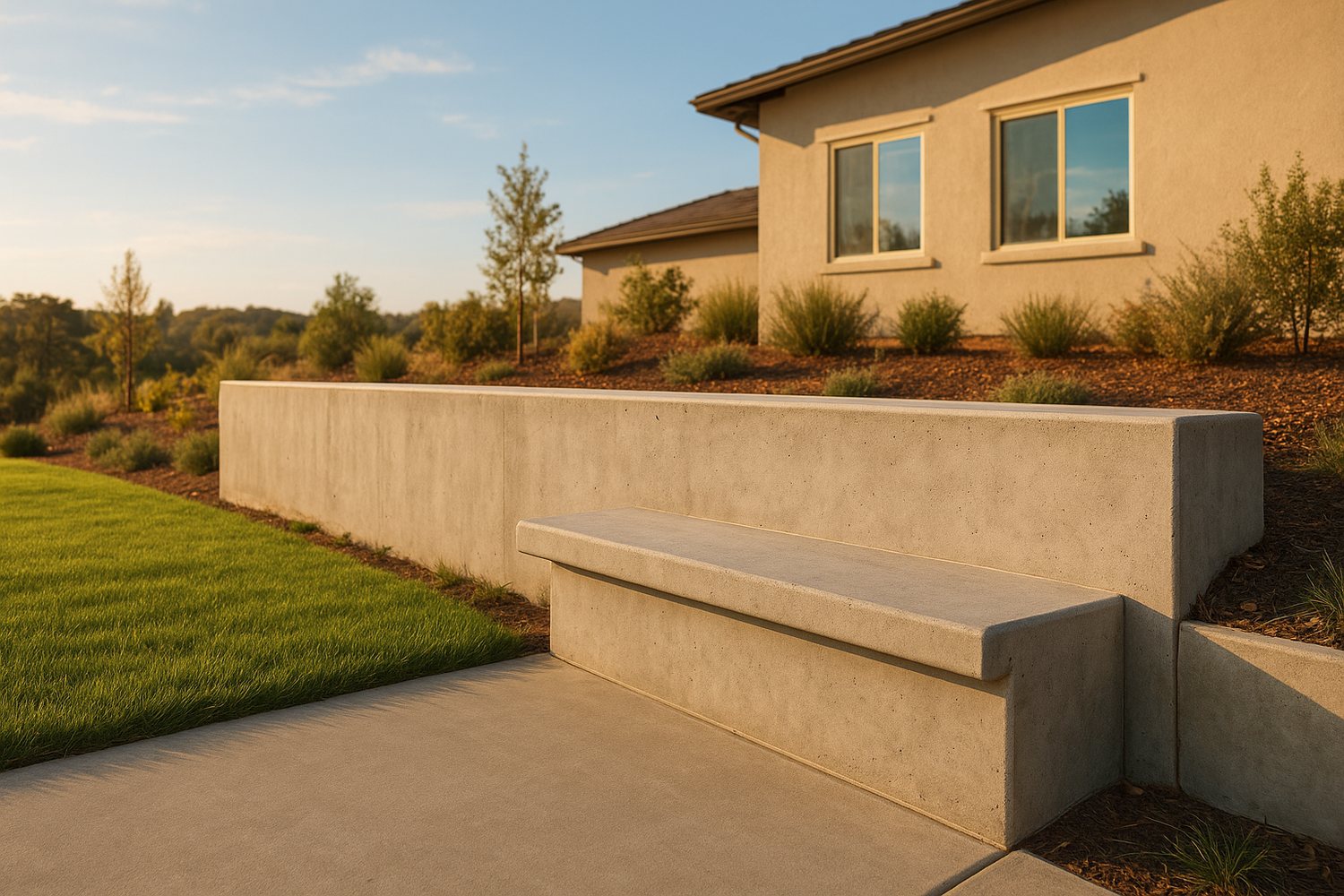
Poured Concrete vs Block Retaining Walls: What Homeowners Should Know
Choosing between poured concrete and block retaining walls isn’t just about looks. Here’s a local guide to get the right fit for your Rocklin-area landscape.
Retaining walls shape the look and endurance of your landscape. Let’s break down the real differences between poured concrete and block retaining walls so you can make a confident decision.
Why Retaining Walls Matter in Our Region
In the rolling terrain of Rocklin, Roseville, Granite Bay, Folsom, Auburn and the surrounding foothills, retaining walls don’t just add beauty—they handle critical tasks. Sloped lots, expansive soils, and the mix of rainy winters and hot, dry summers all put walls to the test. Homeowners often rely on retaining walls to prevent erosion, manage drainage, and create usable outdoor spaces.
California’s microclimates and clay-heavy soils mean wall material and construction choices matter more here than in other places. Flooded yards in winter or cracked, leaning walls after a hot spell aren’t rare if the installation doesn’t fit the local conditions. The right structure can safeguard your investment for years to come.
Expert advice from seasoned professionals who understand concrete in Northern California is key. A wall that’s designed and built for Sacramento Valley soils and weather patterns is always the better long-term bet.
To dig deeper into how poured walls work and if they’re right for your yard, check out our dedicatedpoured concrete retaining wallspage.
What Is a Poured Concrete Retaining Wall?
Poured concrete retaining walls are built by forming up the desired shape, then filling it with high-strength, reinforced concrete. The result is a solid, seamless structure—free from horizontal joints. Skilled installers ensure the forms are square, level, and ready for rebar before placing the mix. Appearance can range from a smooth modern look to decorative patterns pressed into the concrete.
The finished wall can be integrally colored or finished with a range of surface treatments, from broom textures to stone-like stamping. This flexibility means poured concrete can suit modern patio backdrops or blend with classic landscapes. Importantly, a monolithic wall resists water penetration better than stacked units.
Because poured walls are integrated, there’s no risk of individual blocks shifting or separating over time. Reinforcement with steel bars (rebar) helps the wall handle expansive soils and heavy backfill. That makes poured concrete a sound choice for tall or highly loaded applications in our region.
- Monolithic (seamless) structure
- Highly customizable finishes
- Superior water resistance
How Do Block Retaining Walls Compare?
Block retaining walls—sometimes called ‘CMU’ (concrete masonry unit) or segmental block walls—use interlocking concrete units stacked and usually glued or pinned together. Some models are filled with concrete and rebar for extra strength. The look tends to be modular and can lean traditional or modern, depending on block type and color.
Segmental systems go up faster than poured walls and are often popular for DIYers or smaller height projects. The modular nature allows for curves and tight terraces without heavy formwork or specialized finishing. Standard options abound in local supply yards, and blocks typically come in standard gray or pre-finished colors.
However, with more joints comes more opportunity for water seepage and plant growth in the cracks. Over time, differential movement can cause steps or bulges, especially if the base prep isn’t spot-on. Higher walls or slopes with problematic soils often need special engineering to keep blocks from shifting in the long run.
- Modular design: versatile layouts
- Easier to modify in small projects
- Many colors and textures available
| Feature | Poured Concrete | Block (CMU/Segmental) |
|---|---|---|
| Structure | Seamless, monolithic | Modular, interlocking units |
| Customization | Virtually unlimited; forms & finishes | Limited by block shape & stock colors |
| Durability | Excellent with proper reinforcement | Good if engineered, joints may shift |
| Maintenance | Low; few joints | Moderate; joint weeds and shifting possible |
| Drainage Options | Integrated outlets possible | Core fill and weep holes needed |
Durability in the Sierra Foothills: Poured vs. Block
In Placer, Sacramento, and El Dorado County neighborhoods, both poured concrete and block walls have found their uses. But extreme shifts between wet and dry seasons mean durability is the real test. Poured concrete’s continuous structure gives it the edge on resisting cracking, movement, and water infiltration—especially when reinforced properly.
Blocks can be robust when engineered and backfilled meticulously, but their joints remain points of weakness over the years. Here, expansive soils can push blocks out of alignment or encourage unwanted plant growth through joints. That’s why, for larger or structural walls that see heavy loads or challenging drainage, poured concrete stands out.
Local experience suggests that properly built poured concrete walls last longer, particularly in locations where the stakes are high—like poolside grades, against foundation walls, or in hillsides prone to erosion. Still, block walls perform well on modest, decorative, or tiered terraces when installed by knowledgeable teams.
- Poured walls: fewest joint issues
- Block systems: strong if well engineered
- Site conditions should drive your choice
Cost Factors: Upfront and Over Time
Many homeowners ask which option is more affordable. Generally, block retaining walls can have a lower upfront price than poured concrete, especially on small or simple jobs. Block’s modular nature allows for faster installation without custom form building. Supply and labor availability also play a role locally.
Poured concrete’s higher labor and material requirements bring higher initial costs, but the seamless structure can mean less maintenance down the road. There are fewer joints for weeds or water to exploit, which is a relief in our region’s varied climate. For large-scale or high-load installations, poured walls often become more cost-effective over decades.
Remember: site access, wall height, soil movement, drainage, and design complexity all influence the real cost. Consulting a professional who understands both local soils and full-scope construction lets you budget accurately for your specific property.
See more details and compare materials on our in-depthRetaining Wallsoverview.
Design Flexibility: Shape, Color, and Texture
Block walls come in many colors, sizes, and textures—widely stocked at area suppliers. They’re ideal for curved features, short terraces, or mimicking stone at entryways. Their modular character fits informal gardens and contemporary spaces alike. But block shapes do set limits for truly unique or flowing contours.
Poured concrete offers extreme flexibility: curves, heights, angles, and custom details only need the right forms and finishers. Stamping or staining can give the look of stone, wood grain, or even sleek modern surfaces. That means you’re not limited to what’s in stock at the supply yard.
For standout focal points like outdoor kitchens, poolside seating, or extensive multi-level terraces, poured concrete channels greater creative freedom. The tradeoff: more time and expertise required in both planning and execution.
Drainage and Engineering: What’s Essential Here
Whether poured or block, proper drainage is non-negotiable. In the foothills, winter rains and clay soils can build hydrostatic pressure, causing failure in poorly drained walls of any material. Professional installation always starts with appropriate gravel backfill, drainage piping, and weep holes if needed.
Poured concrete walls allow for integrated drainage outlets and are more forgiving of minor water migration because of their monolithic structure. Block walls depend on surface drainage and the alignment of their core fill and outlets to function properly. Either type benefits from reinforcement and backfill specifics that reflect real on-site moisture conditions.
No wall should be built without considering the local grade and water flow. A full-service professional will evaluate your property for red flags—like perched groundwater, expansive soils, or hillside slip risk—before recommending a retaining solution.
- Gravel and pipe drainage required for both
- Poured walls: integrated drainage possible
- Block walls: detail work critical for water management
Finding the Right Wall for Your Property
Your choice comes down to more than just looks or immediate price—it should fit your site’s needs and your long-term plans. In areas with sloping grades, clay soils, or high visibility, poured concrete often shines for resiliency and custom appeal. Block systems offer practical, attractive solutions for more modest applications.
Consulting a builder familiar with the full range of retaining wall materials and methods—especially for California soils and weather—is an investment in peace of mind. Take time to walk your property, talk through wall placement, drainage solutions, and desired style before cementing your decision.
With sound advice and quality workmanship, your retaining wall will blend strength and beauty—shaping your landscape’s future for decades to come.
Ready to shape your landscape? Request a personalizedconsultationwith our outdoor construction experts.
Planning a retaining walls project?
Call or text 916-741-0633, or email sales@californiahardscapes.com with your address, a short description and a few photos, and we will arrange a consultation.