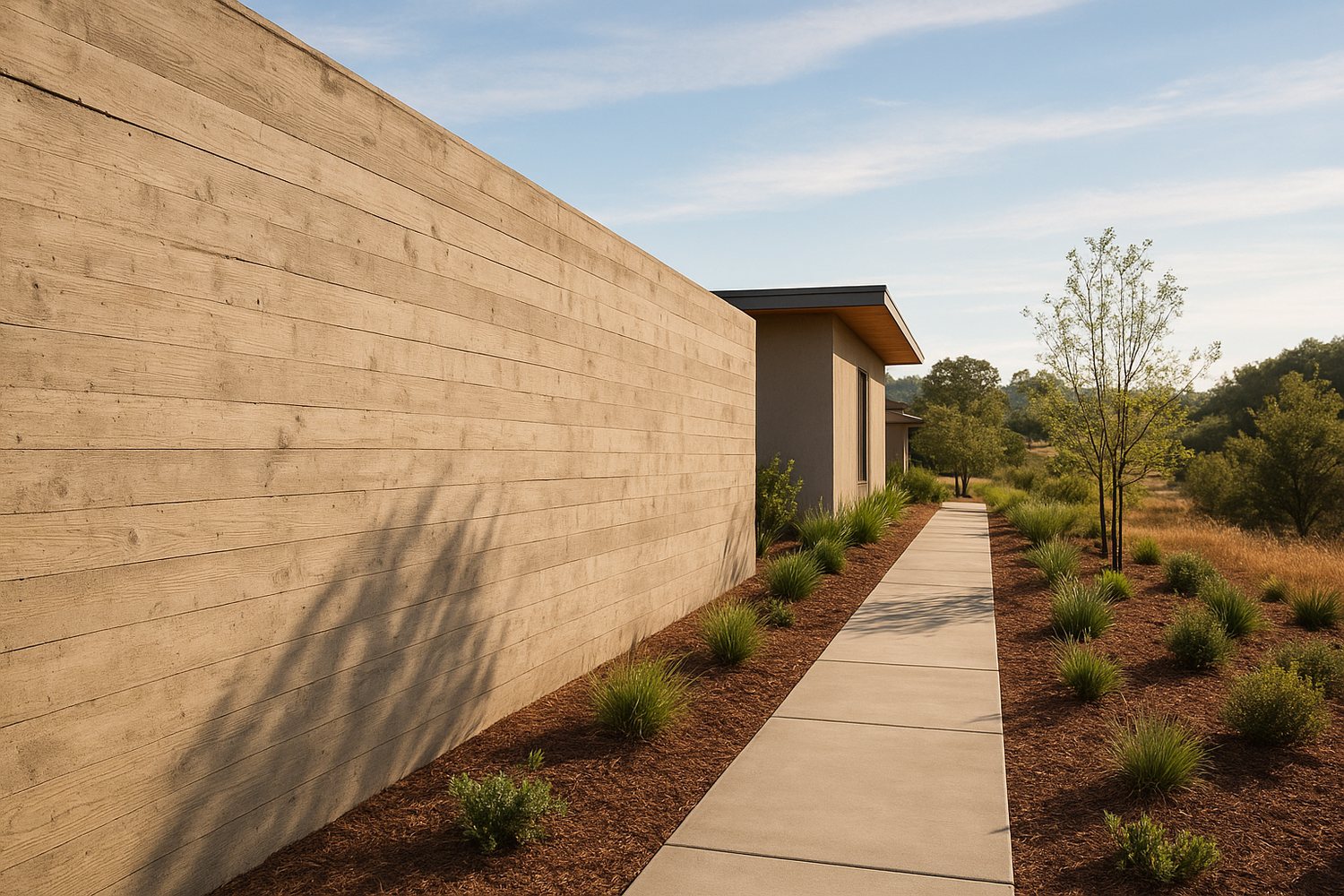
Smooth vs. Board-Formed Poured Concrete Retaining Walls
Not sure whether to choose a smooth or board-formed finish for your poured concrete retaining wall? This guide gives practical, local advice.
Poured concrete retaining walls can be designed with different surface finishes, each with a unique look and feel. Here’s what homeowners in the Sacramento foothills should consider.
Why Concrete Retaining Walls Make Sense Here
Retaining walls in the Sacramento foothills face serious demands: varied soils, hilly lots, and our hot-summer weather. Poured concrete is a solution that brings both structural strength and design versatility. For homeowners in communities like Rocklin, Roseville, Granite Bay, Folsom, and Auburn, a properly built concrete wall is a long-term answer for landscape retention and usable outdoor space.
Unlike block or timber options that can shift or weather quickly over time, poured concrete forms a continuous, reinforced structure. This performance holds up well in our area’s clay soils and during seasonal wet-dry cycles. Proper drainage design is critical—something that should never be overlooked.
A retaining wall is more than just engineered mass. Here, where outdoor living is the norm, appearance matters too. Concrete’s flexibility allows your builder to shape and finish the wall to blend with landscapes, hardscapes, and existing architecture.
Learn more about the process and benefits on ourpoured concrete retaining wallspage.
Smooth Concrete Finishes: Clean, Simple, Modern
A smooth finish is achieved by pouring concrete against tightly built forms, leaving a subtle, even texture. This result is sometimes called form-finished or steel-troweled—no roughness or visible wood grain. It produces a style that pairs especially well with contemporary homes, minimalist landscapes, and modern pool decks.
Homeowners often like smooth finishes for their crisp lines and the way they reflect light. They’re easy to clean and can be sealed or left bare, keeping maintenance straightforward. Paired with neutral color, this look can be timeless or bold, depending on the design context.
However, a smooth wall will show patches, form lines, or minor visual inconsistencies where pours or trowels meet. This is normal for any hand-placed material. Planning for expansion joints and thoughtful layout keeps the wall clean and intentional.
- Bright, sleek appearance
- Matches modern architecture
- Easy to wash down
- Must be properly formed for best look
Board-Formed Concrete: Texture and Character
Board-formed concrete is finished using wood planks in the wall forms, imprinting realistic wood grain and plank lines into the surface. The finished wall hints at timber but is solid, long-lasting concrete. For many homeowners around Placer and El Dorado Counties, this technique delivers visual warmth and complements natural settings.
It’s especially popular in outdoor living areas meant to blend into oak groves, boulders, or wooded hillsides. Even in modern yards, board-formed walls can add artisan character or break up large, plain expanses. Each wall is unique: knots, grain, and seams show up as the wood impressions are transferred to concrete.
This approach has its own design challenges. Precise carpentry matters, since the quality of the wood forms strongly affects the finished result. Expect greater texture variation, which many appreciate as a mark of authenticity and craft.
- Textured with wood grain details
- Suits craftsman and rustic styles
- Great around plantings and natural features
- Best with high-quality lumber forms
| Finish Type | Visual Style | Best Applications | Maintenance | Design Notes |
|---|---|---|---|---|
| Smooth | Clean, uniform | Modern homes, pool decks, patios | Easy to wash, can seal | Highlights color, crisp lines |
| Board-Formed | Textured, wood grain | Natural areas, rustic/craftsman style | Hides minor marks, can seal | Adds warmth, visual interest |
Comparing Smooth and Board-Formed Finishes
If you’re torn between finish styles, think about how texture, context, and architecture come together. Smooth and board-formed finishes offer very different looks, and each one excels in specific settings found throughout our region.
Maintenance is similar for both, usually depending more on exposure and whether you opt for a sealer. Smooth walls make cleaning easier, but both surfaces handle our sun, rain, and temperature swings if constructed and drained correctly.
Color can also influence your decision. Both finishes accept stains or integral color, though the board-formed texture highlights shadows and subtleties more dramatically. The right choice will both support your yard’s function and its overall feel.
Technical Considerations for Local Sites
Soils in Rocklin, Roseville, Folsom, and nearby areas typically demand thoughtful engineering for retaining walls. Clay, decomposed granite, and hillside lots all have unique requirements. Both smooth and board-formed finishes are reliable when installed by experienced concrete professionals.
Drainage is fundamental. Without it, even the strongest wall is prone to pressure and failure. California Hardscapes addresses subsurface drains and moisture control in every installation. Your finish choice does not alter the wall’s structural requirements—but it does affect the type of forms and level of preparation needed.
Be prepared for longer form set-up times and more detailed prep for board-formed finishes. This ensures the best possible transfer of grain and plank lines. Smooth finishes, while requiring careful forming, typically move a bit faster.
- Soil testing and compaction are key steps
- Finish choice won’t impact wall stability
- Drainage system design is regionally critical
Explore all your choices on ourRetaining Walls optionsoverview.
Design Tips: Blending Walls Into Your Space
Think about your outdoor spaces as connected rooms: a retaining wall needs to blend in, not just hold back soil. Smooth concrete can appear architectural close to patios and pools, while board-formed walls suit planted slopes and more natural areas.
For larger properties or multi-level yards, using a combination of finishes can define zones without becoming repetitive. Smooth near dining or entertaining spaces; board-formed in less formal or wooded zones. Plantings, lighting, and seat walls can soften and highlight the concrete’s texture.
If you’re concerned about visual bulk, color can help. Subtle earth tones, charcoal, or even off-whites customized with stains may visually lighten or anchor the structure. Work with your builder to sample and test on-site, where sunlight and surrounding features matter most.
Longevity and Maintenance Considerations
Both smooth and board-formed poured concrete retaining walls stand up well to our weather and seasonal changes. The main factors in longevity are quality construction, proper reinforcement, and thoughtful drainage rather than surface finish.
Maintenance is simple: occasional washing and, if desired, resealing every few years. If vines or plantings are part of your plan, board-formed texture can help disguise dirt or natural aging. Smooth finishes are easier to spray down and check for cracks.
Should repairs become necessary down the road, both styles can be patched or recoated by skilled hands. Most damage in our area comes from shifting soils or irrigation mismanagement, not the finish selection itself.
- Both finishes handle harsh sun and rain
- Sealers can enhance color and protection
- Inspect annually for minor cracks (normal for all concrete walls)
Decision Time: What to Ask When Planning
Before building, ask your contractor to show you finish samples or small mock-ups. Visualizing board-formed grain versus smooth can make the decision clearer and ensure you’re happy with the outcome. Request form board quality details if you prefer the wood-grain look.
Bring a landscape plan or outdoor furniture photos to guide your design. Consider shadows, lighting, and plantings as part of the wall’s effect on your yard. It helps to walk the site and see where each finish might shine and where transitions make sense.
Both smooth and board-formed finishes are suitable for local soils and climate. The right choice comes down to style preferences and site-specific details. Ask Marty and the California Hardscapes team for honest input—their local experience is one of your best resources.
- See samples before starting
- Discuss finish transitions on larger sites
- Plan your wall as part of a bigger outdoor vision
Ready for expert advice?Request a consultationwith Marty and the California Hardscapes team.
Planning a retaining walls project?
Call or text 916-741-0633, or email sales@californiahardscapes.com with your address, a short description and a few photos, and we will arrange a consultation.