Planning for Replacing Old Timber Retaining Walls
Is your timber retaining wall showing age? Learn how to plan a smart, lasting replacement using modern techniques tailored to the Sacramento region.
If your property has an aging timber retaining wall, you’re probably seeing bowing boards, rot, or even movement in the soil. Replacing it doesn’t have to be overwhelming—planning ahead helps ensure long-lasting results and a smooth upgrade.
Signs Your Timber Retaining Wall Needs Replacement
Many timber retaining walls in our area were built decades ago and face challenges from rain, soil movement, and dry summers. Visible signs like leaning, bulging boards, or gaps often reveal that a timber wall’s structural days are numbered. These issues progress quickly and can escalate into larger problems for your yard or home.
Rot is one of the most persistent problems with timber in the Central Valley and Sierra foothills. When you press on the wood and it feels soft or flakes apart, it’s usually more than surface weathering. Fungal decay under the soil line can render the wall useless even before you see major surface damage.
Other warning signs include failing anchors, erosion behind the wall, or muddy spots where water leaks through. These indicators mean repairs may only buy a little time—planning a timely replacement helps avoid surprise headaches and extra costs.
Bullets:
For a complete look at how we handle wall repairs and upgrades, visit ourRetaining wall repair and replacementpage.
What Replacement Materials Make Sense Locally?
Timber is rarely the best solution for a replacement in today’s market—especially in our regional climate. You have several more durable options to consider, each with benefits for both strength and appearance. Concrete block systems (SRW), poured concrete, and natural stone all work well for Rocklin, Roseville, and the surrounding towns.
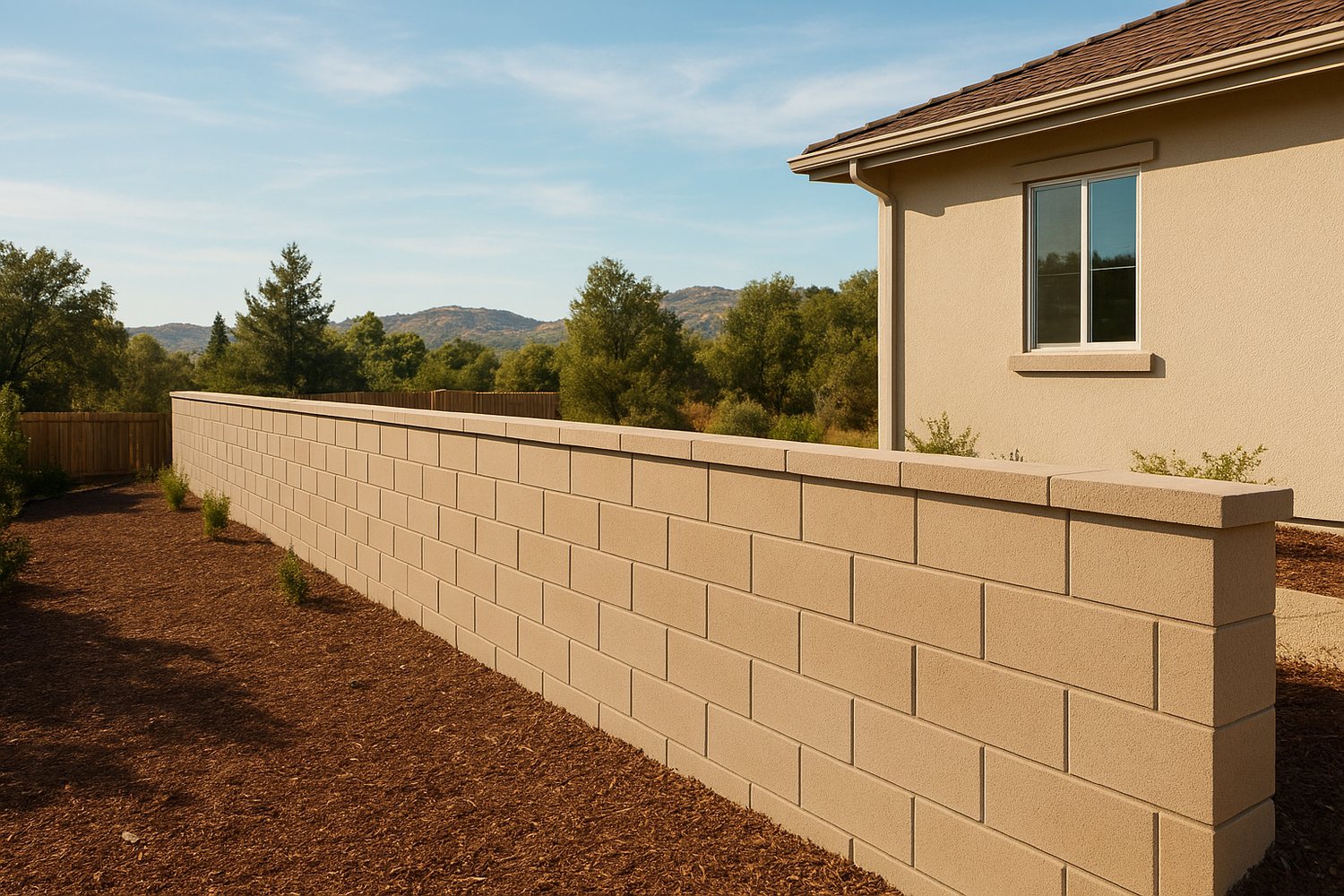
Segmental retaining walls made from interlocking concrete blocks are a top pick for most Placer and Sacramento County homes. These systems are engineered to resist pressure, are less likely to shift, and provide a clean, modern look. For taller walls or where load-bearing is crucial, poured concrete is extremely stable and can be finished in many textures or patterns.
Natural stone offers unmatched style, especially in established Granite Bay and Folsom neighborhoods. While it often costs more in labor, it blends beautifully in landscapes with native rock features. Compare what fits your property’s grade, budget, and landscape style.
Bullets:
Timing Your Project: Weather, Access, and Planning
Retaining wall projects in Placer, Sacramento, and El Dorado Counties are best planned for dry, mild seasons. Wet weather makes excavation slower and risks soil instability. Spring and fall provide comfortable conditions for both demolition and building.
Access matters—a narrow side yard, nearby structures, or steep slopes can change how materials or equipment reach your wall area. A premium contractor will assess these features when providing a plan and timeline. Sometimes, a job might require creative solutions for access, especially in established neighborhoods.
Start your planning well in advance to allow for design and material selection. Depending on wall type and site complexity, expect lead times for material delivery. Early planning means fewer surprises and more seamless construction.
Bullets:
Understanding Drainage: A Make-or-Break Factor
In this region, poorly drained retaining walls are a top cause of failure, especially as soils get saturated during winter rains. Old timber walls often lack proper drainage fabrics, gravel, or weep holes. Your replacement should focus on resolving these weaknesses.
Every new wall—whether block, poured concrete, or stone—should have a designed drainage system. This may include gravel backfill, dedicated drainage pipes, and landscape fabric to keep soil from clogging the flow. Effective drainage protects the wall’s integrity and reduces maintenance headaches.
It’s well worth discussing runoff and yard grading while you plan your replacement. These steps keep water moving away from your foundation and help you avoid repeat repairs years down the line.
Bullets:
| Material | Strength & Longevity | Appearance | Maintenance | Typical Uses |
|---|---|---|---|---|
| Interlocking Concrete Block | High – lasts decades | Modern, varied textures/colors | Low | Most garden/yard applications |
| Poured Concrete | Very high – customizable | Sleek or textured finishes | Low to medium | Tall/structural walls |
| Natural Stone | High – centuries with proper install | Classic, natural look | Low | Upscale/landscape-focused |
Comparing Retaining Wall Replacement Options
Choosing the right material and construction method for your new retaining wall in Rocklin or surrounding neighborhoods depends on multiple factors. Durability, appearance, maintenance, and cost can all play significant roles in your decision.
Modern concrete block systems are popular for their longevity, strength, and range of colors and textures available. Poured concrete allows for custom finishes—smooth, stamped, or textured—while stone adds natural character but at a higher cost and installation complexity.
It helps to compare the most important features side by side to understand what fits your site and your goals for long-term value and performance.
Want to explore all the materials and options for modern retaining walls? See ourRetaining Wallsoverview.
Site Preparation and Demolition of Old Timber Walls
Removing an existing timber wall takes careful planning. Deconstruction needs to manage soil pressure safely and avoid damaging nearby structures or plants. Typically, old timbers are cut or pried out in sections, and all fasteners should be removed or disposed of properly.
Once the old wall is out, the area must be excavated back to solid, undisturbed ground. Any slumping, loose, or saturated soil should be removed and replaced with compacted material. This is also the ideal time to improve drainage before starting the new wall.
Proper site prep not only lays the groundwork for your wall’s strength but also reveals any unexpected issues—such as hidden irrigation lines or roots—that can be handled before construction begins.
Bullets:
What to Ask Contractors: Experience and Methods Matter
Hiring the right contractor for your retaining wall replacement means checking their experience with the specific materials you’re considering. Ask about past experience, recommended wall systems for your soil type, and how they address drainage and soil movement.
A reputable contractor will help you compare options, explain what sets quality installations apart, and walk through timelines and what to expect during the build. Local knowledge—especially with our foothill soils and potential for shifting—is a big plus.
Don’t hesitate to ask for written plans, references, and material specs so you’re clear on exactly what will be built. Your comfort with the process starts with these open conversations.
Bullets:
Making the Upgrade: Last Steps Before Construction
Before construction starts, confirm material choices, colors, and any patterns or finishes. Double-check access arrangements and make sure irrigation or landscape features are either protected or moved out of the way.
Clear communication with your contractor ensures everyone is on the same page and scheduling goes smoothly. Confirm who will be present during key milestones—for example, final layout, site inspections, or major deliveries.
With proper planning, replacing an old timber retaining wall becomes a manageable, rewarding project that secures your property—and often adds curb appeal for years to come.
Bullets:
Ready to start planning your wall replacement? You canrequest a retaining wall consultationwith our team.
Planning a retaining walls project?
Call or text 916-741-0633, or email sales@californiahardscapes.com with your address, a short description and a few photos, and we will arrange a consultation.