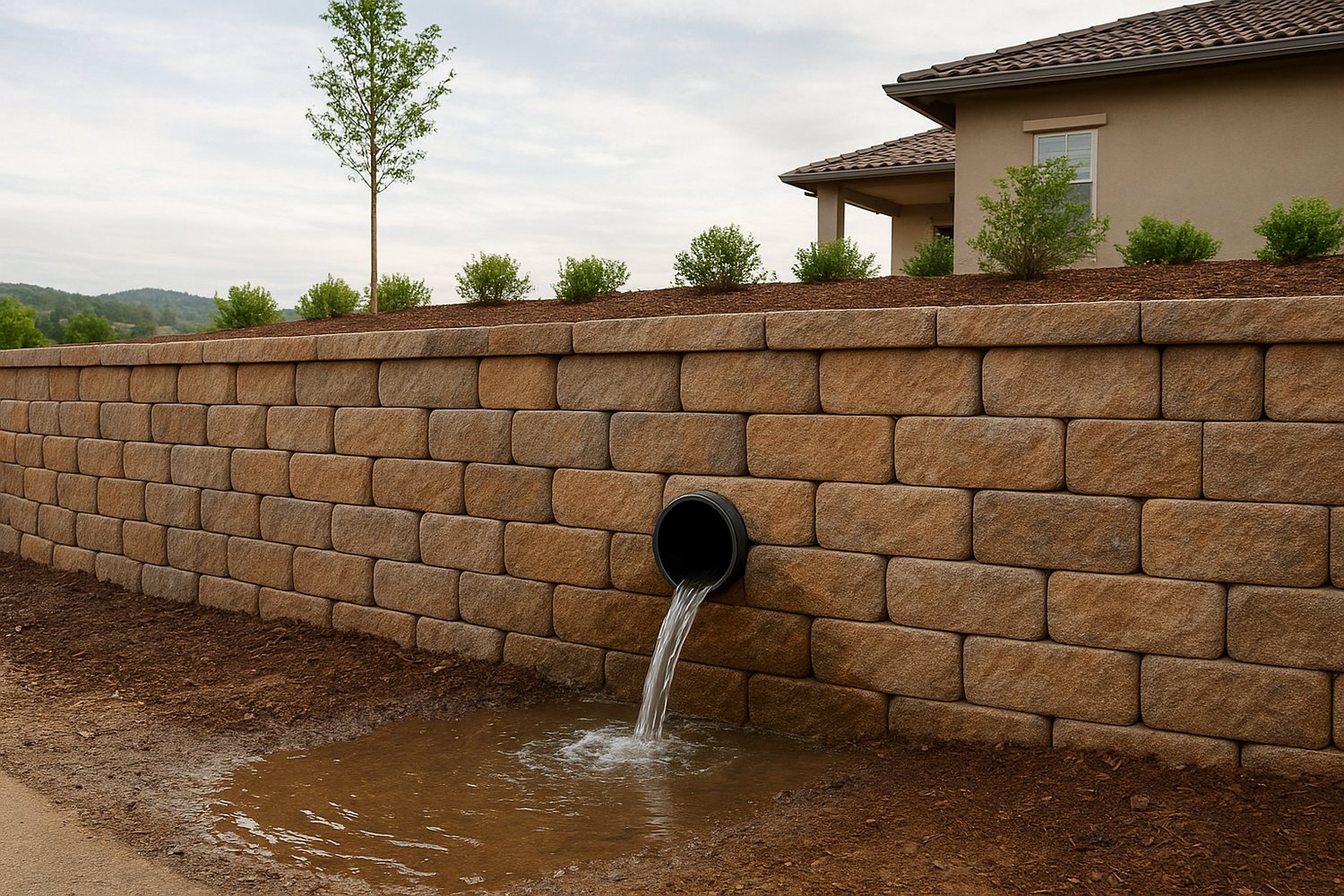
Retaining Wall Drainage: Weep Holes vs Drain Pipe Systems
Not sure about the best drainage for your retaining wall? Here’s a direct comparison of drain pipes and weep holes, with practical insight for local homeowners.
Proper drainage can make or break a retaining wall in our region. If you’re weighing weep holes against a drain pipe system, here’s what really matters for long-term strength.
Why Drainage Matters for Retaining Walls
Water is one of the biggest factors that can impact the durability of retaining walls, especially in our Northern California foothill communities. Without reliable drainage, moisture can build up behind the wall, leading to soil erosion, wall movement, or even sudden failure.
Rocklin, Roseville, and the surrounding areas experience seasonal rains and irrigation runoff. This puts local retaining walls under regular pressure from groundwater trying to escape. Every properly built wall should have a thoughtful drainage plan tailored to these regional conditions.
Whether you’re considering a new wall or maintaining an older one, understanding the basic options—weep holes and drain pipe systems—can help you protect your home and landscape investment. Let’s break down how each method deals with water behind the wall.
For more information on proper water management behind walls, visit ourRetaining wall drainagepage.
Weep Holes Explained
Weep holes are small, evenly spaced openings left at the base of a retaining wall. Their main job is to allow trapped water to flow through and out from behind the wall, helping to relieve pressure. Weep holes are simple and have been used by masonry builders for generations.
Since gravity helps pull the water down, weep holes are relatively low maintenance and easy to inspect. They typically suit shorter residential walls, especially those made from concrete block or natural stone. In the drier stretches of Placer and El Dorado counties, old-school weep holes can be enough.
Of course, not all soil drains the same way. Weep holes alone may not keep up if the area behind your wall is poorly draining clay or gets heavy runoff. It’s important to combine them with gravel backfill to prevent soil from clogging the openings.
- Effective for quick drainage at the wall base
- Low upfront cost and simple design
- Best for shorter or gravity retaining walls
What Are Drain Pipe Systems?
A drain pipe—or ‘French drain’—system is usually a perforated pipe installed along the bottom of the retaining wall, embedded in gravel. This setup collects and reroutes water along the length of the wall, guiding it out to a low point or proper outlet.
This active drainage is especially valuable where slopes are steeper, the soil is heavier, or there’s regular irrigation and rain. Folsom and Granite Bay properties with more elaborate landscapes often rely on drain pipe systems for this reason.
Installing a drain pipe system involves a bit more planning and material, but it can handle greater water volume than weep holes alone. It’s a good strategy if you’ve experienced standing water or see signs of water pressure against older walls.
- Controls water along the entire wall length
- Ideal for taller walls or poor-draining soil
- Directs water to a safe outlet, reducing erosion
| Feature | Weep Holes | Drain Pipe System | Best Use | Maintenance |
|---|---|---|---|---|
| Water volume handled | Low to moderate | Moderate to high | Soil type, slope | Annual visual inspection |
| Installation complexity | Simple | More involved | Wall height, drainage needs | Check blockages |
| Cost | Lower | Higher | Budget sensitivity | Keep outlets clear |
| Reliability | Adequate for small jobs | Best for challenging sites | Local rainfall | Professional check |
| Combining methods | Possible | Ideal | Redundancy | Annual review |
Comparing Weep Holes and Drain Pipes: What Homeowners Should Know
Both weep holes and drain pipe systems have strengths, but the right solution often depends on your specific property and wall design. Weep holes are low-effort and cost-effective, while drain pipe systems offer added insurance where water issues are more severe.
Think about your yard’s slopes, average rainfall, and whether irrigation hits the upper side of your wall. Weep holes may suffice in semi-arid settings or low walls, while taller or hillside retaining walls in Auburn or Granite Bay benefit from a robust pipe system.
Partnering with experienced outdoor construction pros ensures your retaining wall gets a drainage system suited to your site—so you avoid future headaches, leaning walls, or surprise repairs.
Benefits and Drawbacks: Local Considerations
In the Sacramento and Placer County foothills, clayey and rocky soils are common, and those conditions affect both drainage options. Weep holes may clog up more quickly in finer soils or if the wall backfill is not properly installed.
Drain pipe systems demand careful sloping and periodic outlet checks, especially in landscapes with tree roots or heavy silt. Partial blockages can mean water backs up, causing the same problems you were hoping to avoid.
Ideally, a hybrid solution—using a drain pipe with weep holes—is often recommended for challenging sites. This dual setup ensures redundancy: water always has somewhere to go, even if one part gets temporarily blocked.
- Soil type can affect ideal drainage choice
- Hybrid solutions boost long-term reliability
- Routine checks keep all systems effective
Explore a complete overview of availableRetaining Wallssolutions for your property.
Installation: What to Expect
Installing weep holes is often faster, involving drilling or leaving out blocks at intervals when building the wall. This keeps construction less intensive and is typically completed in step with wall assembly.
Drain pipe systems, on the other hand, require trenching behind the base of the wall, laying the pipe, surrounding it with gravel, and ensuring it slopes to match your yard’s drainage pattern. Outlet placement is critical—it must not drain toward foundations or neighboring properties.
Professional teams like ours assess slopes, soil, and wall height before recommending a layout. Understanding your property’s grading and likely water flow helps set up a drainage solution that adds years to your wall’s life.
Maintenance and Longevity
Weep holes are low-maintenance if built with proper gravel backfill. It’s a good practice to periodically check that weep holes aren’t blocked by debris, weeds, or silt, especially after winter storms or heavy irrigation.
Drain pipe systems demand more forethought. Check for visible clogs at the outflow point at least once a year. Occasionally, roots or subsurface silt can work their way into the perforated pipe; regular inspection helps keep water moving freely.
No drainage solution is truly ‘set and forget’—but a bit of annual attention prevents most problems. The extra effort of keeping outlets clear pays off with less risk of wall movement and lower long-term repair costs.
- Annual checks for all drainage types
- Clear away debris after storms
- Professional inspection recommended for large walls
How to Decide: Next Steps for Your Wall
Choosing between weep holes and drain pipes comes down to your landscape’s unique challenges. If your yard is mostly flat, has fast-draining soil, and your wall is under three feet, weep holes may be all you need for trouble-free performance.
For taller, engineered, or hillside walls, or if you notice retained water after rains, investing in a quality drain pipe system is almost always the right move. If in doubt, a combination ensures both routine and extreme weather are covered.
Consult with seasoned local experts who understand the types of soils and drainage issues common from Rocklin to Auburn. With the right advice, you can count on your wall to last through every rainy season ahead.
If you’d like a site-specific recommendation,request a consultationwith our experienced team today.
Planning a retaining walls project?
Call or text 916-741-0633, or email sales@californiahardscapes.com with your address, a short description and a few photos, and we will arrange a consultation.