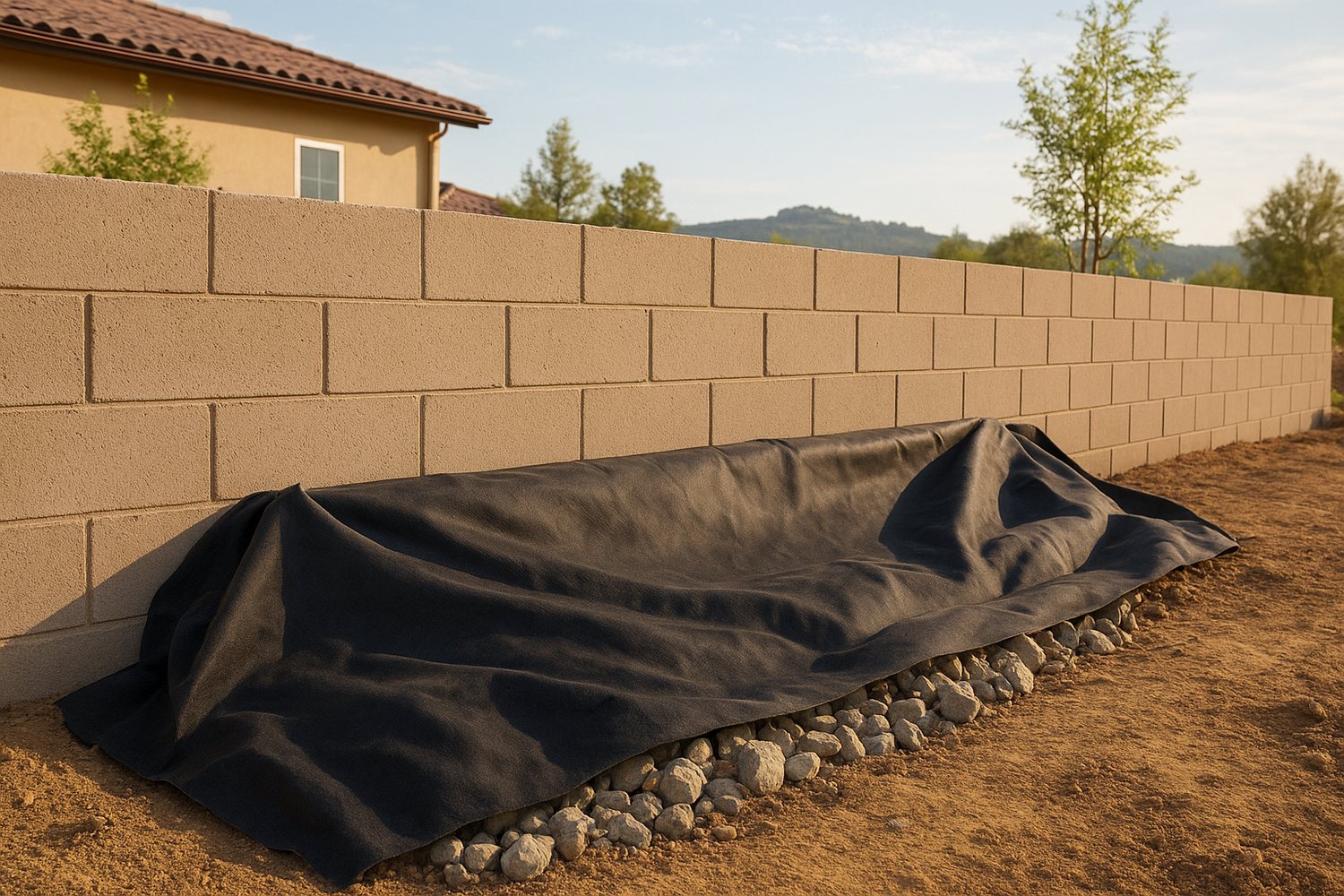
What Goes Behind a Retaining Wall? Drainage Essentials for Placer & Sacramento Homeowners
Explore the real techniques and decision points for proper retaining wall drainage in Rocklin, Roseville, Granite Bay, Folsom, Auburn, and neighboring communities.
If you’re considering a retaining wall for your home, what goes on behind the wall often matters just as much as what you see from the street. In areas like Rocklin, Roseville, and beyond, proper drainage behind any retaining wall is crucial to its performance and your property’s long-term value.
Why Retaining Wall Drainage Matters
Retaining walls aren’t just about holding back soil—they’re about handling water. Without built-in drainage, water builds up behind your wall, leading to pressure, cracks, or even failure. In our Sacramento Valley and Sierra Foothill climate, heavy winter rains and clay-heavy soils can make this a serious risk for homeowners.
Proper drainage protects your investment. It keeps hydrostatic pressure in check, prevents soil erosion, and helps avoid soggy yards or foundation issues. No matter if your wall is concrete, stone, or block, drainage is the unsung hero for safety and long-term stability.
Skipping drainage details may be tempting, but it’s never worth the risk. California Hardscapes, managed by Marty and team, knows that what you don’t see behind the wall makes all the difference, especially here in the foothills where water runoff can be unpredictable.
For even deeper insight into design, soil, and climate concerns, visit ourRetaining wall drainageresource page.
Gravel Backfill: The First Line of Defense
The space directly behind a retaining wall is typically filled with gravel, not just dirt. This clean, angular rock allows water to flow freely downward, reducing pressure on the wall. A proper backfill layer usually extends at least twelve inches from the wall face into the hillside.
In Rocklin and nearby communities, our decomposed granite soils can trap water. Using the right gravel, carefully compacted, keeps the area dry and lets water reach the designated drains, rather than accumulating and pushing against your wall.
Never use clay-heavy or dense native soil as backfill. It’s tempting to save on materials, but it invites water problems down the road. Stick with proven aggregates for lasting performance.
- Washed, angular gravel is ideal
- Backfill should run full wall height
- Compaction prevents settlement issues
Drain Pipes: Let Water Escape, Don’t Trap It
A perforated drain pipe (aka ‘French drain’) is often installed at the base of the wall, hugging the backside just above the foundation. Its job? Collect and carry water away from the wall foundation before it builds up.
This is especially important on sloped properties in Folsom, Auburn, and Granite Bay, where runoff naturally flows towards your wall. The pipe typically exits to daylight (a safe runoff spot) or a storm drain, away from your foundations or patios.
Neglecting this pipe invites water to pool and seep through the wall face, causing unsightly stains and potential instability. It’s a simple step with major benefits.
- Use 4" perforated pipe for best results
- Wrap pipes in landscape fabric to prevent clogging
- Slope the pipe at least 1% for effective flow
| Wall Type | Backfill Material | Drainage Pipe | Landscape Fabric | Water Escape Method |
|---|---|---|---|---|
| Dry-Stacked Stone | Gravel | Optional | Recommended | Through joints |
| Engineered Concrete Block | Gravel | Required | Required | Pipe to daylight/storm drain |
| Timber | Gravel/Sand | Recommended | Recommended | Weep holes + pipe |
| Cast-in-Place Concrete | Gravel | Required | Required | Pipe to low spot |
| Gabion | Rock | No | No | Direct through rock fill |
Landscape Fabric: Keeping It Clean and Stable
Between the gravel and soil sits a layer of heavy-duty landscape fabric. This acts as a barrier, preventing fine soil particles from washing into the drain gravel and pipe. When installed correctly, it keeps your drainage free-flowing and your backfill stable.
Especially with our region’s clay and loam mixes, landscape fabric helps prevent clogs that can sneak up after a wet winter. It’s a small investment that saves big on future headaches by maintaining separation between soil and drainage layers.
Don’t confuse landscape fabric with thin weed mats — retaining wall grade geotextile is stronger and designed for the pressure of soil against gravel. It’s a quiet performer that protects your entire drainage system.
- Always overlap fabric seams by at least 12 inches
- Extend fabric up the wall face and several feet behind
- Avoid rips or gaps during installation
Comparing Wall Drainage Techniques
Homeowners often ask: Do all retaining walls need the same drainage? The answer depends on materials, wall type, and site conditions. Not every wall is the same, and neither is every yard in Placer, Sacramento, or El Dorado County.
While dry-stacked stone or block walls sometimes let water seep through joints, engineered concrete or masonry walls need more purposeful drainage features. The elevation, soil type, and local rainfall all play a role in deciding which techniques to use.
Here’s a comparison of common approaches to drainage behind residential retaining walls, to help clarify your options:
Explore design options and compare styles in ourRetaining Wallsoverview.
Regional Considerations: Placer to El Dorado Hills
Our local climate isn’t quite the same as the rest of California. From the wet winters in Auburn to hot, dry stretches in Roseville, region-specific planning is essential. Soil composition, slope, and rainfall can all affect drainage choices.
Granite Bay and Folsom properties may deal with more granite or rocky base, which impacts drainage rates. Clay-rich soils found in Placer County, on the other hand, can make water slow to drain—meaning your drainage must work overtime after big storms.
Partnering with a contractor who knows these local quirks can spare you costly drainage headaches and maintenance troubles unique to our region.
- Account for local rainfall patterns
- Test your soil type before design
- Consider hillside vs. flat lot differences
Warning Signs of Poor Drainage
Even well-built walls can develop drainage issues over time. Watch for water stains, moss growth, or wet soil near the base of your wall after a rainstorm. These can signal trapped moisture or failing drainage layers.
Bulging, bowing, or cracking of the wall face is a red flag—it’s often caused by excessive water pressure. Pay attention after especially wet winters or after making changes to landscaping above the wall.
Regular inspections, especially before and after storm season, are your best tool for catching drainage problems before they escalate.
- Standing water near the base
- Efflorescence (white residue) on wall surface
- Plants or moss growing on wall faces
Decision Time: DIY vs. Professional Help
Many homeowners consider building their own retaining walls, but drainage is where DIY projects can stumble. It’s not just about digging a trench and stacking block—getting the layers, slopes, materials, and outlets right makes all the difference.
Experienced professionals consider the full site picture: soil types, slopes, drainage runs, and future landscape needs. In places like El Dorado Hills and Rocklin, each neighborhood can bring new challenges best managed by someone who’s seen them before.
Before any shovel is in the ground, compare your comfort level for managing these details. Proper retaining wall drainage is an investment in your home’s safety and peace of mind.
- DIY may suit low, simple walls in flat areas
- Complex sites or tall walls benefit from pro insight
- Mistakes in drainage design are hard to fix later
To talk through your site’s unique needs,request a consultationwith a local expert.
Planning a retaining walls project?
Call or text 916-741-0633, or email sales@californiahardscapes.com with your address, a short description and a few photos, and we will arrange a consultation.