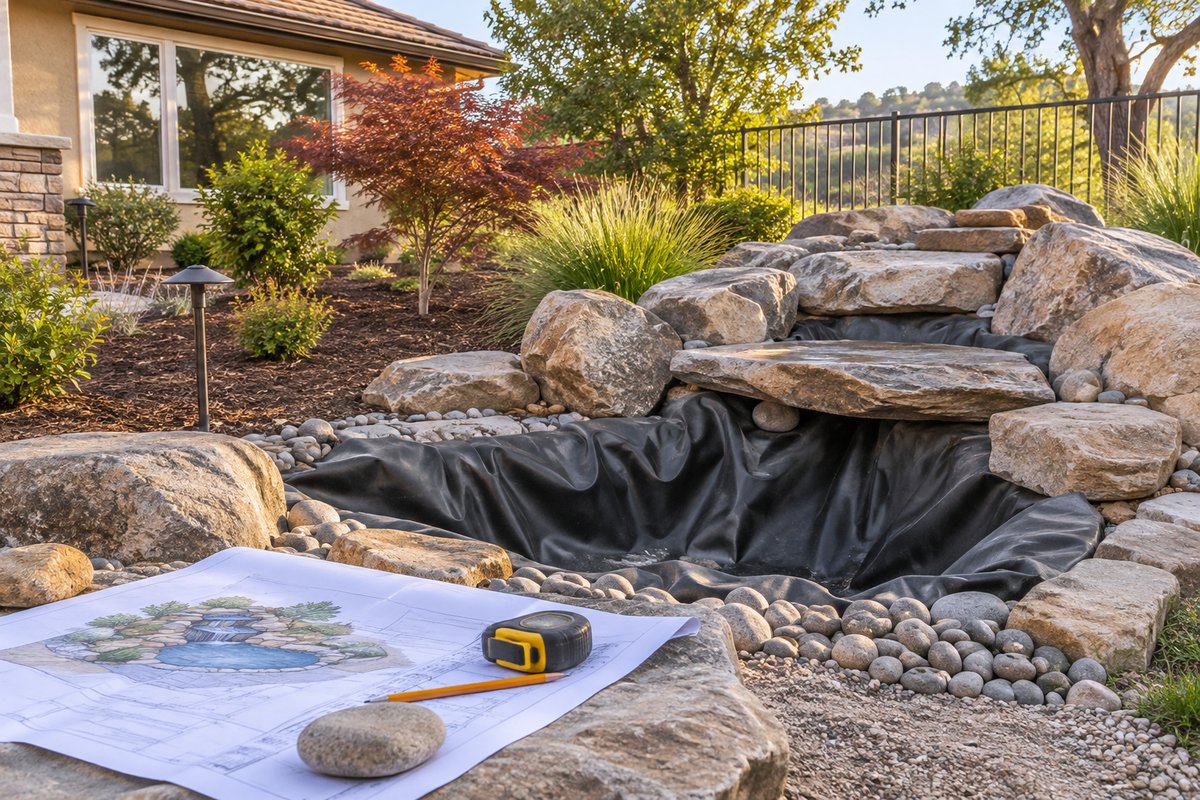
Planning Water Features in Rocklin: Permits, Site, Weather, and More
A step-by-step guide for Rocklin homeowners planning water features. Covering permits, HOA, utility marking, soil, slope, drainage, weather, and timing for exceptional results.
Understanding Rocklin’s Rules: Permits, HOA, and Compliance
Before you dig or design, first step is to understand if your city or community has any specific requirements for your planned water feature. Most projects in Rocklin—whether it’s a soothing garden fountain, a dramatic pondless waterfall, or a modern water wall—can be subject to local permits or homeowners association (HOA) architectural review. These requirements can dictate size, placement, fencing, setbacks, plumbing, and even aesthetic guidelines, especially in planned communities. Every property and HOA can be different, so check with your HOA board and the city office before committing to plans or builder. This careful step can help you avoid delays or costly changes mid-project.
Permit needs will depend on scope. Engineering or safety regulations may apply for electrical work, gas fire features, or deeper ponds such as koi ponds. Approval timelines can vary—start the approval and review process early in your timeline. For the latest city guidelines, always refer to the official city website or speak directly to a building department official. HOAs often require a formal submittal and can take weeks for approval. Whether updating an old feature or starting fresh, early communication is key. If you need weather updates for scheduling appointments or construction, check the National Weather Service – Rocklin forecast.
California Hardscapes works with licensed, bonded and insured contractors, ensuring that every installation respects the highest standards of compliance, safety, and quality. While they do not handle permits or HOA submissions, their planning process prioritizes results that meet and exceed expectations: built with pride, finished with excellence.
Call Before You Dig: Utility Locations and Safety
Homeowners excited about a reflecting pool or bubbling urn sometimes overlook what’s below the surface: utilities. In Rocklin, state law requires you to call 811 before any excavation. This free utility marking service helps prevent dangerous—and expensive—mistakes. Marked lines might include gas, water, electrical, telecom, or irrigation pipes. Even shallow digging for a bubbler fountain or new wiring for fire and water features could intersect existing services.
Plan your project timing to allow for utility markings before design is finalized. The process can add several days before site work begins, but it ensures your investment starts—and finishes—safely. If any questions arise about what’s below, you can request a copy of the site survey from the utility provider for review. Skipping this vital step can halt progress, so start utility location before any trenching, digging, or major layout work.
Safe construction practices also mean being thoughtful about placement: avoiding tree roots, pool lines, and other sensitive zones. Discuss any known site utilities or drainage lines with your builder so your water feature sits safely and smartly in your landscape.
Soil, Slope, and Grading: Rocklin’s Landscape Realities
Every neighborhood in Rocklin brings its own landscape quirks, from rolling granite-outcrop backyards to finer clay valley soils. These soil types impact your options for waterfalls, streams, and ponds. For example, hard clay soils make it easier to hold water for a koi pond or reflecting pool, but need smart drainage planning. Granite boulder-rich lots may need excavation equipment and careful waterproofing to ensure stability for fountains or modern water walls.
Proper grading is critical, especially in areas with slope. Water designed to flow naturally—such as along a garden stream or over a spillway—needs the right elevation and slope calculations. Gentle slopes can create opportunities for visually stunning waterfalls or recirculating pondless systems. But steep slopes may require retaining walls, custom basins, or advanced drainage to control runoff.
Drainage goes hand-in-hand with grading. Directing stormwater away from structures, patios, and sensitive plantings prevents soil erosion. Overflow routes, gravel layers, and under-drain systems should be integrated from the planning stage. Your builder can size pumps, basins, and pipes appropriate for the texture and permeability of your soil. Site-specific planning yields a finished water feature that lasts, rather than requiring constant fixes or adjustments.
Planning for Rocklin’s Summer Heat and Winter Rain
Rocklin’s climate creates unique challenges and opportunities for water features. Summer temperatures frequently top 100°F, making water circulation, shade, and efficient pumps vital. In the hottest months, shallow water and features exposed to direct sun can lead to evaporation or algae blooms. Choosing the right pumps and filtration, shading parts of the water, or using darker materials can help manage both water clarity and temperature. For more on typical weather patterns when planning construction or maintenance, consult the National Weather Service’s local forecast.
Rain arrives in late fall through early spring. Proper overflow and drainage are essential—features without overflow planning can flood, leading to muddy landscaping or even foundation trouble. Basins and sumps should be sized to handle heavy rain events, particularly with pondless waterfalls or formal fountains near structures or fences.
Climate-appropriate planning also means considering seasonal maintenance. Leaf drop, winter rain, and even occasional frost can affect how your water feature operates. Maintenance routines as simple as cleaning filters or adjusting water flow should be built into your plan. Working with contractors experienced in Rocklin’s microclimates can prevent climate-related headaches and protect your investment.
Project Timing: When to Plan and Build in Rocklin
Timing your project is as important as choosing the right style. In Rocklin, the most popular building season runs from late winter through late spring. Dry soil, mild weather, and longer daylight hours allow for easier construction and minimal weather-related delays. However, high demand in these months means that schedules can fill quickly—start discussions early if you hope for a spring or summer finish.
Summer installation can be challenging due to extreme heat and soil compaction. Working in hot weather requires careful hydration for workers and rapid setting for concrete and finishes. If working in summer, features like water features that create shade or movement can actually help cool outdoor spaces once completed.
Fall is a quieter, often overlooked season, perfect for upgrades or smaller water walls and bubblers. By planning off-peak, you may enjoy faster turnaround, but need to factor in risks of early rain. Winter is best suited to planning, design, and permitting rather than active construction, particularly during Rocklin’s wetter months. During any time of year, be sure to use the Rocklin weather forecast to schedule around storms or heatwaves.
Choosing the Right Water Feature for Your Landscape
Rocklin’s lots and soils allow for a range of water features, from dramatic fire and water combinations to tranquil streams and low-profile spillway bowls. When choosing, start with how you plan to use your outdoor space: Is the goal a focal point, a relaxing retreat, or a backdrop for entertaining?
If you want drama and minimal maintenance, a pondless waterfall is a popular choice. Bubbling urns and bubblers offer compact, water-wise elegance and are safe for families. Koi ponds bring movement and wildlife, but require more involved filtration and seasonal care. Formal reflecting pools from California Hardscapes can set a modern, architectural tone.
Consider the bigger picture, too—integrating patios, seat walls, and plantings for shade and color. California Hardscapes offers coordinated planning so that your water feature fits seamlessly with walkways, walls, and the plant palette. Each element is planned and built by licensed, bonded, and insured contractors under leadership with decades of experience in quality concrete and outdoor environments.
Water Feature Construction: Materials and Methods
Quality starts with the foundation. In Rocklin, using the right materials for your soil and climate is crucial. Concrete, reinforced liners, and durable pumps are chosen for longevity and reliability. Bubbling urns, spillway bowls, and modern water walls require both aesthetic planning and solid installation to withstand seasonal cycles.
Beyond materials, successful water feature construction means precise layout. Pipes, pumps, and electrical runs for fire and water features or more complex pond systems demand coordination and expertise. Size and place your mechanical equipment so it’s accessible for maintenance but screened or softened by planting or seat walls.
Working with licensed, bonded, and insured contractors ensures not only code compliance, but workmanship that will last. California Hardscapes brings a reputation for quality and integrity to every part of planning and building: never cutting corners, always aiming for results that exceed even the highest expectations. Pride and excellence are built into every step of the process, from layout to finishing.
FAQ: Planning Water Features in Rocklin
What permits or HOA approvals might I need?
Permit and HOA needs can vary widely depending on location, size, and feature type. Projects involving plumbing, electrical, or large excavations typically have higher oversight. Always check with your city and HOA early in your planning process. Each governing body has its own process, timeline, and set of requirements.
What’s the best water feature for a sloped lot?
Gentle slopes are perfect for pondless waterfalls or streams, turning the grade into an asset. Steeper slopes may use retaining walls or terracing to safely control both water flow and soil support. Design is always site-specific—drainage and overflow must be included in the plan.
How do I plan for Rocklin’s hot summers and wet winters?
Choose efficient pumps and design for maximum circulation to fight summer heat and algae. Shade and proper filtration also help. For winter rains, include overflow basins, drainage, and waterproofing. Consult the localized Rocklin weather forecast to help with timing and maintenance planning.
Getting Started: Consult with the Experts
Building a water feature in Rocklin, whether a garden fountain, reflecting pool, or fire and water showpiece, is a transformational investment. Careful planning—taking permits, utilities, slopes, soils, climate, and timing into account—delivers water features that stand the test of time. Led by Marty and built by licensed, bonded, and insured contractors, California Hardscapes competes on quality, integrity, and results, not shortcuts or the lowest price.
Planning a project in Rocklin, CA?
Call or text 916-741-0633, or email sales@californiahardscapes.com with your address, a short description and a few photos, and we will arrange a consultation.