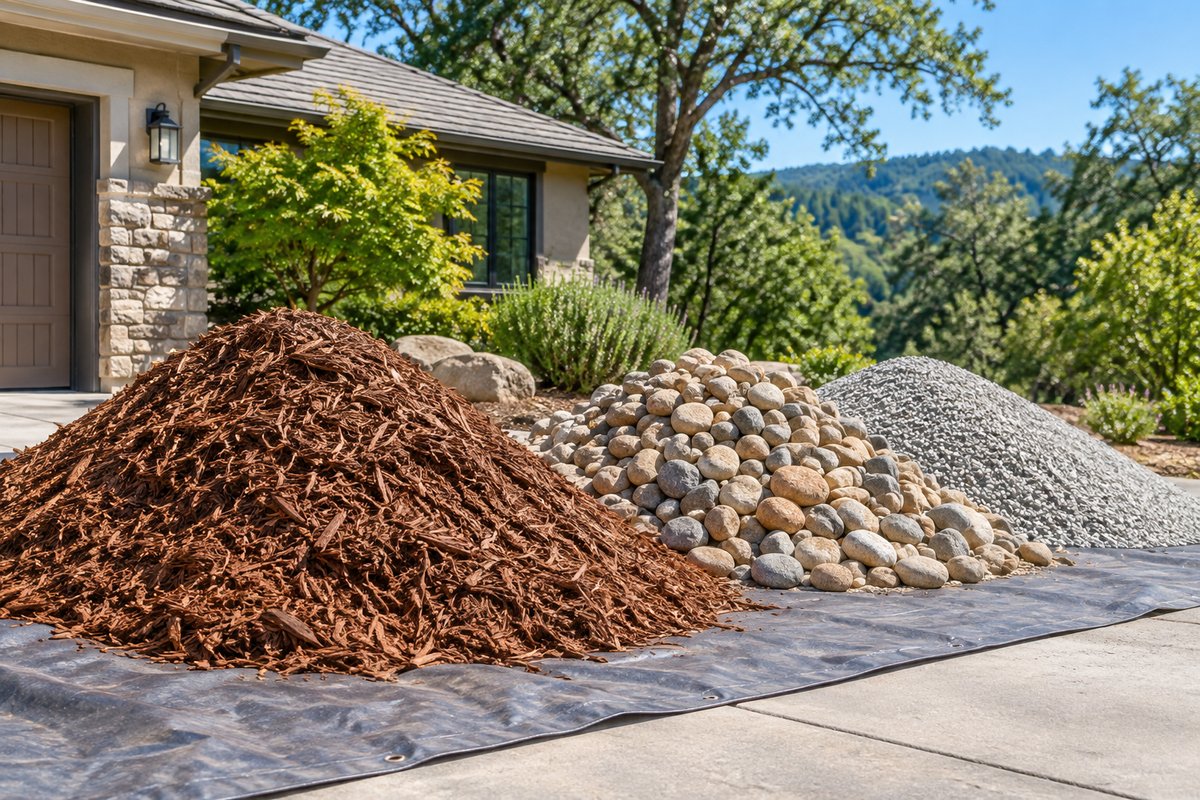
A Planning Guide for Landscape Materials in Granite Bay, CA
Planning a landscape project in Granite Bay? Learn how to choose, order, and prepare for bulk delivery of mulch, rock, gravel, boulders, and more.
Getting Started: Planning for Landscape Materials in Granite Bay
Transforming your Granite Bay property with new landscape or hardscape features starts with thorough planning. Whether you’re refreshing garden beds with bark, building walkways with pavers, or incorporating decorative gravel, successful projects start with understanding local requirements and conditions. California Hardscapes delivers a range of hardscape and landscape materials directly to homes and job sites throughout the area, making it easier to source everything you need in bulk for do-it-yourself or contractor-led projects.
It’s essential to clarify your vision and identify the materials that best address your property’s needs. Different Granite Bay yards face challenges like clay soil, variable slopes, or the need for decorative or functional enhancements like mulch for weed control or boulders for erosion management. Early decision-making about materials ensures your project runs efficiently once work begins.
One critical early step is to review any local regulations or homeowners association (HOA) rules that may apply to your improvements. Permits or HOA approvals might be required for projects such as retaining walls, patio pavers, or significant grading work. Requirements vary widely between neighborhoods, so check with your HOA or the Granite Bay office referenced on the material provider’s website before purchasing or beginning work.
Understanding Permits, HOA Approval, and Regulations
For many landscape projects in Granite Bay, particularly those involving major hardscape installations—like patios, retaining walls, or extensive grading—permits may be required by the county or city. Always confirm rules with your HOA if your neighborhood has one, as modifications to front yards, fences, and hardscapes often need written approval. Most permit applications require a site plan and material outline, so knowing which products you intend to use from the beginning is helpful.
Minor upgrades, such as spreading mulch or adding decorative rock, rarely need official permits, but projects affecting water flow or slope stability may. Since obtaining permits or waiting on HOA review can delay your schedule, start this process early. California Hardscapes recommends consulting the office linked above or your HOA board to clarify the need for approvals before placing an order for bulk delivery.
Keep in mind that when using products like base rock and drain rock for drainage or foundational work, extra attention to local codes is warranted. Requirements for french drains, retaining walls, or grading can be specific; assess whether soil engineering or drainage design is needed for your Granite Bay lot.
Safe Digging: Utility Marking and Site Prep
Before moving dirt, digging trenches, or installing new features, always ‘call before you dig.’ Granite Bay properties often contain underground utility lines for power, internet, water, or gas. Protecting these lines is not just about safety—it is a regulatory requirement. Request free utility location marking through the service referenced by your utility provider; this simple step prevents costly and dangerous accidents.
Prepping your site for delivery is just as important. Map out where you want bulk loads placed. Communicate with the delivery provider about clear access, surface protections such as plywood over paved driveways, and any slope concerns. Bulk materials like mulch and bark, river rock and cobble, and boulders are much easier to move the closer they are dropped to the installation area. Plan in advance to maximize safety and minimize hauling effort.
Protect adjacent structures and garages, especially if using wheelbarrows for distribution. Be mindful of local weather forecast when scheduling both your dig and your delivery, to avoid delays caused by rain or excessive heat that may soften driveway surfaces or make labor hazardous.
Granite Bay Soils, Slopes, and Drainage Techniques
Granite Bay is known for varied topography, with slopes and mixed soils common throughout the area. Recognizing underlying soil types on your property is crucial for choosing materials and planning installations that will last. Heavy clay soils, for example, are common and benefit from the addition of topsoil and soil amendments to improve drainage and support healthy plant growth.
Addressing slopes requires particular attention to both soil stability and drainage. For steep yards or areas prone to erosion, products such as landscape boulders, decomposed granite, or drain rock can reinforce embankments and direct water flow safely away from foundations. Lining slopes with bark mulch also helps trap moisture and prevents rapid runoff during winter rains.
If your project includes retaining walls or extensive grading, proper drainage systems are essential to avoid water pooling and future damage. Discuss options with your contractor for underlayment, compaction techniques, and which aggregate materials will work best for your yard’s unique needs.
Choosing Materials for Granite Bay: Function and Style
A successful result depends on matching materials to both the aesthetic goals and the functional demands of your site. For moisture retention and weed suppression, mulch and bark blends deliver impressive curb appeal and practical benefits. If you aim to enhance drought tolerance and fire safety, opt for non-combustible options like decorative gravel and rock and river rock around perimeter beds.
Paths, patios, and high-impact zones call for durable choices. Decomposed granite makes for low-maintenance walkways that remain cool underfoot, while materials like pavers, wall block, and boulders define outdoor living spaces. For underlayments beneath paving or as base for artificial turf, base rock offers stability and proper drainage—both critical in Granite Bay’s varied weather.
For lawns and garden beds, upgrade root zones with high-quality topsoil and soil amendments. California Hardscapes guides customers to select blends tailored to specific plantings, improving both short-term planting success and long-term landscape health.
Adapting to Granite Bay’s Weather: Summer Heat and Winter Rain
Granite Bay’s Mediterranean climate brings long, hot summers and wet winters. Plan your schedule and material choices accordingly. In summer, materials like bark and mulch minimize water loss and keep soils cooler—key for plant vitality and lower irrigation needs. For heavy foot traffic or high-use areas, decomposed granite resists heat and compaction issues that often occur with lighter gravels during peak sun.
Winter storms test both drainage systems and slope stability. Before first rains, double-check that drain rock and other permeable materials are correctly installed to carry water off site. Use non-slip aggregates in areas that can become slick in wet conditions, particularly on paths or driveways.
Ordering ahead of expected weather swings ensures material availability and gives ample time for soil amendments to incorporate before planting. Keep in mind that delivery delays are always possible in wet weather, so plan material drop-off accordingly and cover bulk materials with tarps if they’ll sit for several days.
How Much to Order: Calculating Volume and Managing Delivery
Accurately estimating the amount of each landscape material you need will save time, money, and effort. Most bulk materials—mulch, bark, compost, or aggregate—are sold by the cubic yard. For reference: one cubic yard covers about 100 square feet at a 3-inch depth, which is typical for mulch or gravel.
Walk your project area and measure length and width to calculate square footage, then decide on your required material depth. If you’re unsure how to convert these numbers or what blend is right for your yard, California Hardscapes can help guide homeowners, landscapers, and contractors in Granite Bay to make the best selection. Each product, from river rock to topsoil, has a suggested coverage depth that factors into volume calculations.
Prior to delivery, clear a space for the load drop, considering driveway protection with plywood sheets or scheduling placement where future spreading will be easiest. Communicate any access limitations or surface concerns in advance to ensure a smooth drop-off of your landscape materials.
Project Timing: When to Schedule Landscape Material Delivery
Choosing the best time for your landscape materials delivery depends on both weather and project type. For planting and lawn upgrades, early spring or late fall allow for beneficial rainfall and mild weather with less stress for plants and workers. Hardscape projects, such as paths or retaining walls, are best scheduled during dry months to maintain compaction and avoid muddy conditions.
Order all materials before you or your contractor begins site prep. This minimizes delays and ensures the correct products are on hand at each project phase. For larger jobs, consider scheduling multiple deliveries—finish grading before ordering decorative rock or mulch, for instance—to keep staging areas uncluttered and maintain workflow.
Allow extra time if your project may require permit or HOA approval, and factor holidays, extreme heat, or rain events into your planning. Communication with your material provider helps adjust delivery windows as needed to match progress on-site.
FAQ: Common Granite Bay Landscape Material Questions
What materials are delivered in bulk to Granite Bay homes?
California Hardscapes delivers a comprehensive selection, including bark and mulch, decorative gravel and rock, river rock and cobble, landscape boulders, decomposed granite, topsoil and soil amendments, base and drain rock, pavers, sand, flagstone and wall block directly to job sites.
How do I protect my driveway or walkway during delivery?
To prevent surface scuffs or cracks, use plywood sheets or thick tarps under the drop zone before truck delivery. Discuss any surface limitations or landscaping concerns when placing your order, so the best drop location can be arranged for both safety and efficiency.
Can I get advice on choosing the right material and quantity?
Yes—sharing your project details, measurements, and intended use allows California Hardscapes to recommend the most suitable product, whether you need decorative gravel, mulch, topsoil, or aggregates. Accurate square footage and depth help calculate the exact quantity needed for your Granite Bay landscape project.
Planning a project in Granite Bay, CA?
Call or text 916-741-0633, or email sales@californiahardscapes.com with your address, a short description and a few photos, and we will arrange a consultation.