A Homeowner’s Planning Guide: Landscape Materials Delivery in Cameron Park
Learn how to plan your Cameron Park landscaping project—permits, drainage, soil, utility marking and timing—all with delivered landscape materials.
Getting Started: Local Regulations and HOA Approval
Every landscape or hardscape project in Cameron Park, CA should begin by checking with local authorities. Many neighborhoods have homeowners’ associations, and county or city codes may regulate new patios, walls, outdoor living areas or even the kinds of landscape materials that can be used. Before starting, it’s wise to confirm if your planned project needs a permit or HOA review. HOA approval is often required for visible improvements like retaining walls, front yard patio installations, or new driveways. Permits may be necessary for grading, drainage changes, or structures. Because requirements can change and depend on the project scope, check with the El Dorado County offices. Use the Events and Meetings Calendars—El Dorado County to find workshops or contact numbers for local departments and HOA contacts that can guide your next steps.
While California Hardscapes delivers the landscape and hardscape materials, site approvals and HOA documents are a homeowner’s responsibility. Some materials may be subject to design guidelines or fire-wise landscaping rules—a key concern in Cameron Park’s climate zone. For example, bark or mulch may be restricted near home structures in some high-fire-risk neighborhoods. Always confirm the allowed materials and setbacks before ordering. Planning permits and HOA paperwork in advance prevents delivery delays and costly redesigns later on.
If your project includes major grading or drainage, or impacts neighboring properties, additional engineering review may be required. Be prepared to submit diagrams, material lists, or elevation plans as needed. Contact the appropriate office linked above for specifics before ordering materials for your site.
Call Before You Dig: Utility Safety and Project Prep
Safe site preparation starts with knowing what is beneath your property. Cameron Park is no exception—utilities including gas, water, telecommunications, and power run underground throughout residential neighborhoods. Before any project involving excavation, trenching, or stake installation, it is essential to call 811 or use the state’s utility marking service. Utility companies will mark buried lines, helping you avoid hazardous and costly accidents.
This step is important for backyard patios, drainage swales, fence-post holes, or even spreading boulders and decomposed granite where digging may be required for edging. Projects using decomposed granite, base rock or drain rock typically involve some ground disturbance. Flag the delivery site and show contractors where locates have been completed before work begins.
Plan the delivery location with clear access, avoiding newly marked utility lines. This planning prevents site damage on concrete driveways or paver patios. If your landscape design involves multiple materials, such as mulch and bark for garden beds and decorative gravel for pathways, mark out each drop site to keep materials separate and the job running smoothly.
Soil, Slope, and Drainage: Planning for Cameron Park Yards
Cameron Park terrain often includes a mix of hillside lots, rocky soils, and compacted fill. Good planning for new landscape materials means assessing soil conditions, existing slope, and water drainage. Bulk material choices—like topsoil and soil amendments—help gardens thrive on poor native dirt, while river rock or landscape boulders can create natural-styled accents that help stabilize slopes.
Drainage is crucial in neighborhood yards, especially with steep grades or heavy clay soils common to the region. Adding drain rock beneath flagstone patios or at the base of retaining walls can prevent water from pooling and keep hardscape features stable through the rainy season. If you have erosion-prone slopes, consider combining rock with engineered terraces or erosion-control mulch to keep yards safer and lower maintenance.
California Hardscapes offers guidance to help you select the right materials for your site conditions. Well-prepared ground, matched with the best bulk materials, means lawns, beds, and patios last longer and require less maintenance. Always plan drainage routes and check with local offices for any additional guidelines on water movement and erosion.
Choosing the Right Materials for Weather and Fire Safety
In Cameron Park, the balance of hot, dry summers and cool, wet winters shapes your landscape material choices. Fire-wise landscaping is especially important; in many neighborhoods, non-combustible materials such as decorative rock, river rock and cobble, boulders, and decomposed granite are recommended for defensible spaces and border plantings. These materials help protect your home while emphasizing a low-water, low-maintenance design.
Mulch and bark may be appropriate away from house foundations to nourish soil and control weeds. For raised beds or gardens, topsoil and soil amendments support healthy plant growth. Hot summers also favor paths and patios constructed from hardscape materials—like pavers, wall block, or flagstone—for durable, heat-resistant surfaces.
When planning material delivery from California Hardscapes, factor in winter weather. Rain can saturate soil and soften driveways, so plan ahead if you need to protect surfaces during drop-off. Cover sensitive areas or coordinate with the contractors to use the right materials at the right time of year for the longest life and best effect.
Project Timing: Planning Around Cameron Park’s Seasons
The Mediterranean climate of Cameron Park means spring and fall are prime times for landscape and hardscape installs. Soil moisture is ideal for planting and material placement, and the summer sun has not yet baked the ground. Scheduling bark delivery during late winter or early spring gives mulch a head start before heat arrives, while base rock and paver installations can be completed before peak temperatures.
Summer projects benefit from early starts before high temperatures slow work and stress new plants. If winter is expected to be particularly rainy, focus on tasks like decomposed granite paths or rock garden features that won’t be impacted by soft soil. Always allow for a few days’ flexibility; storms or unexpected weather may delay material delivery by licensed, bonded and insured contractors who complete the installations.
For large projects or deliveries to less accessible yards, coordinate not only with contractors but also reference the county events calendar for scheduled road work or neighborhood activities. This avoids congestion and helps you select the best delivery window.
How Much Material to Order: Measuring and Estimating
Ordering the right quantity of bulk landscape materials saves time and money while reducing waste. Landscape materials are delivered by the cubic yard, with coverage depending on type and application depth. For example, one cubic yard of bark or mulch generally covers about 100 square feet at three inches deep. Decorative gravel, rock, or decomposed granite varies in coverage based on size and installation thickness.
Measure your project area carefully, calculating square and cubic footage for beds, paths, or patios. Include extra for sloped or irregular areas, and account for compaction if laying base rock or soil amendments. California Hardscapes helps customers estimate amounts based on your drawings or dimensions. Use their online guides or request help by sharing your needs and site details.
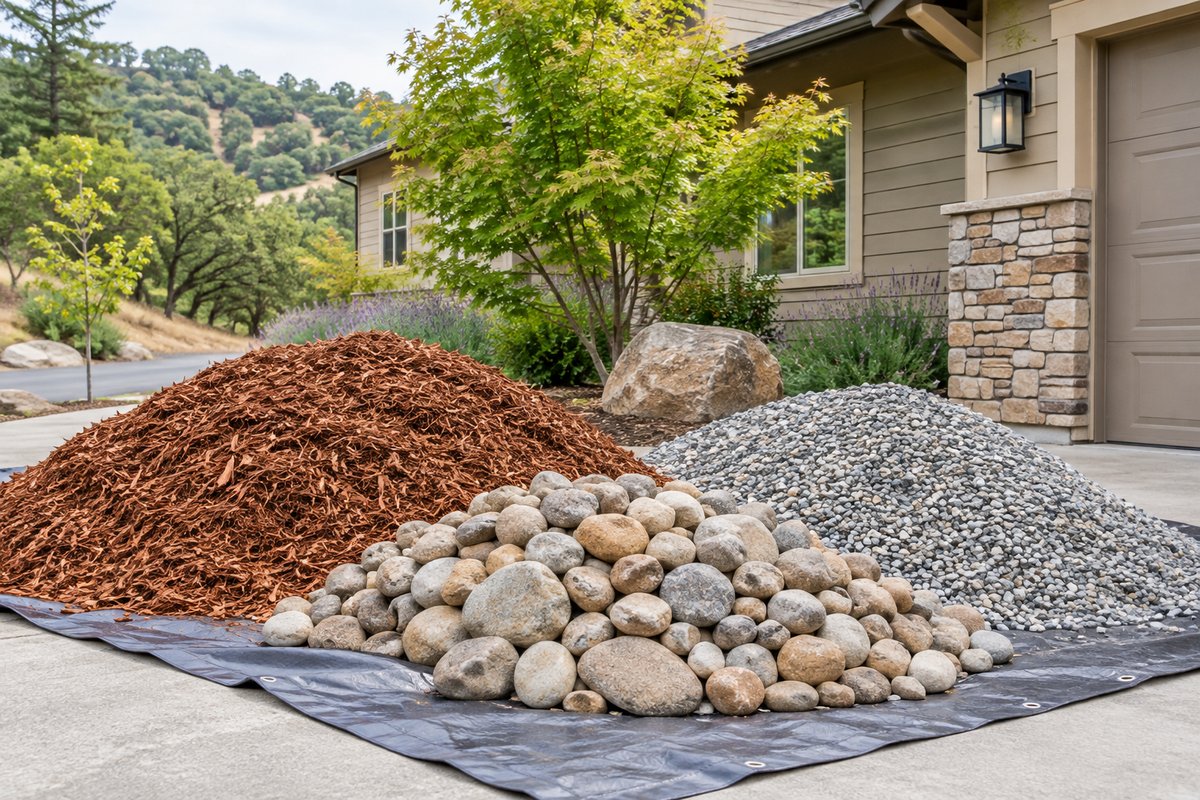
Before delivery, plan designated drop sites that will not block driveways or neighboring properties. Clear debris and mark out separate areas if you’re receiving more than one type of material, such as landscape boulders plus topsoil. Protect existing hardscape by laying tarps or boards where possible.
Coordinating Delivery and Protecting Your Property
Landscape material suppliers like California Hardscapes deliver bulk rock, mulch, sand, and more directly to your hillside lot, driveway, or job site. Drop locations should be level, accessible to large vehicles, and able to support weight without damaging pavement, pavers, or landscaping. If you’re concerned about surface damage, discuss options with your contractor and prepare with plywood sheets or mats where needed.
Drivers cannot unload on public streets without clearance; ensure all vehicles can enter and exit safely. Avoid placing bulk materials where rainwater runoff may carry them away or where they will impede emergency access. Consider the project’s full timeline: some materials need to be used within a certain period, especially topsoil or soil amendments, while others such as boulders or river rock can remain safely staged on-site.
To streamline the process, coordinate between material delivery and professional installation by licensed, bonded and insured contractors. Set realistic expectations and communicate scheduling needs, especially during busy landscaping months in Cameron Park.
FAQ: Landscape Materials Planning in Cameron Park
Do I need a permit or HOA approval for landscape materials delivery?
Most material deliveries themselves don’t require permits, but new installations such as patios, retaining walls, or grade changes may. Check with El Dorado County offices or your HOA to learn the specifics for your neighborhood. The county events calendar provides links to departments where you can ask about your project type.
What’s the best way to estimate how much material I need?
Calculate the area to be covered in square feet, then determine the desired depth. Use online guides, or contact California Hardscapes with your measurements for support. Different materials—such as bark or mulch and boulders—require different coverage calculations.
Who completes the installation after materials are delivered?
Installations for hardscape and landscape materials are done by licensed, bonded and insured contractors. California Hardscapes supplies and delivers the products, helping you match materials to your needs and local requirements.
Ready to Start? Plan Your Project with Expert Support
Laying the groundwork for a successful Cameron Park yard or landscape project starts with practical planning—permits, schedules, soil prep, and material selection. Choosing a supplier with deep local expertise helps ensure you get the right hardscape and landscape materials from the start. Led by Marty, who brings over 30 years’ experience in concrete and construction, California Hardscapes delivers bulk materials and guidance to every Cameron Park project.
For expert help with estimating, material selection, or scheduling landscape materials delivery, Call or text to order.
Planning a project in Cameron Park, CA?
Call or text 916-741-0633, or email sales@californiahardscapes.com with your address, a short description and a few photos, and we will arrange a consultation.