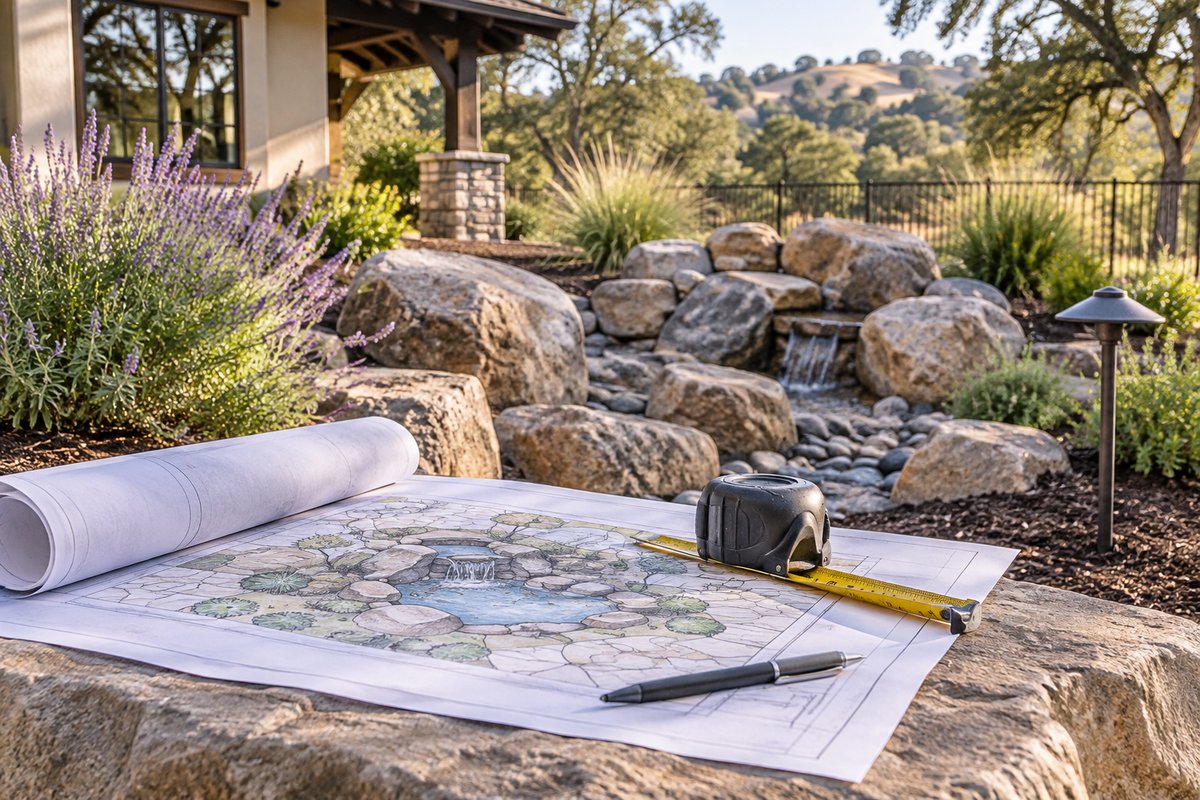
Planning Water Features in Loomis, CA: Practical Steps for Homeowners
Before installing a garden fountain, koi pond, or pondless waterfall in Loomis, CA, review local permit requirements, utility marking, soils, grading, HOA rules, and the best timing for construction.
Planning a Water Feature in Loomis: Where to Begin
If you’re thinking about adding a pondless waterfall, koi pond, garden fountain, or modern water wall to your Loomis property, a clear plan saves headaches and helps your investment last. Water features for Loomis homes work best when they’re tailored to local soils, slope, HOA or city rules, and our dramatic seasonal shifts from baking sun to heavy rain. This guide breaks down the practical steps—from securing permits to planning timing—that help you create a focal point meant to thrive in Loomis.
California Hardscapes is led by Marty, who brings over 30 years of hands-on concrete and construction experience to every project, with each installation completed by licensed, bonded, and insured contractors. The process is designed to take your ideas from vision to reality with quality, integrity, and no corners cut.
Whether your interest is in reflecting pools, bubbling urns, or fire and water features, starting with a solid plan sets the stage for a result that impresses for years to come.
Securing Permits and Navigating HOA Rules in Loomis
Before beginning a water feature project, check what approvals will be needed. In Loomis, structures like ponds, large fountains, patios, pools, and retaining walls may require permits. The Town of Loomis Building Department offers current requirements and application details. For those in HOA neighborhoods, design and landscaping changes—including water features—often need HOA review and approval. The submittal process, timelines, and design guidelines vary widely by association.
When considering a garden stream, koi pond, or any feature with pumps, plumbing, or hardscape, permit requirements may change based on size, depth, and location relative to property lines or protected trees. Some projects may need engineered plans or inspections, especially if grading or electrical work is involved. Always verify with the building department and your HOA, if applicable, before finalizing design decisions or scheduling work.
Whether you are dreaming of a garden fountain or a complex water wall, knowing the legal requirements keeps the project on track and avoids costly revisions halfway through construction.
Call Before You Dig: Utility Location and Safety
Every successful water feature project begins with a safe site. Utility lines—electrical, gas, and communications—run underground in Loomis neighborhoods, sometimes right where a pondless waterfall or garden stream is planned. Striking these can be costly and hazardous. California law requires all excavations, even shallow digging or trenching for plumbing or foundation pads, to be preceded by a request for underground utility marking.
Before ground is broken, be sure to contact 811 or visit your local utility’s notification center. This free service arranges for professionals to mark utility lines, helping protect both workers and property. Whenever you notice electrical issues during or after construction, use the PG&E outage and safety resource to report hazards and check power status in Loomis.
For any installation requiring pumps or lighting—such as pondless waterfalls or fire and water features—utility planning is essential both for safety and for ensuring smooth inspections if those are needed for permits.
Soil, Slope, and Drainage: Adapting to Loomis Lots
Loomis sits at the edge of foothills, with soils ranging from sticky clay to granite-rich decomposed granite. The right foundation for a water feature is entirely dependent on soil type, slope, and natural drainage patterns. For example, tight clay soil may hold water from a koi pond well but create pooling issues elsewhere, requiring careful grading and sub-drainage. Slope considerations are especially important when building features like garden streams or cascading fountains, where directing water safely away from structures avoids long-term damage.
On many Loomis properties, combining hardscape design with site contouring and appropriate plantings helps control runoff during heavy rain, protects new installations, and prevents erosion near patios or walls. Discuss soil testing and potential grading solutions early on with your design and construction professionals, as adjustments here lead to safer, longer-lasting results.
Reflecting on your lot’s unique conditions helps you select water features, such as reflecting pools or koi ponds, that will thrive and minimize maintenance.
Sizing and Siting: What Fits Best for Loomis Backyards
The perfect water feature is not just about personal taste but about what suits your property’s size, sun exposure, views, and maintenance goals. In Loomis, larger lots can accommodate expansive installations, but even smaller yards can enjoy the serenity of bubbling urns or compact garden fountains.
Consider how the sun and shade shift throughout the day, especially for koi ponds, which need partial shade to minimize algae and overheating in summer. Proximity to mature oaks or pines also influences placement, as roots and falling debris can impact both installation and ongoing care. Locating your water feature near patios, entryways, or visible landscape vistas makes the most of both the sound and sight of moving water.
Loomis backyards often benefit from grouping water elements, such as combining a custom water feature with adjacent fire or seating areas, for four-season usability.
Planning for Loomis Weather: Heat, Rain, and Project Timing
Loomis sees summer temperatures well above 100°F and winters that bring soaking rains. Successful water feature construction, as well as long-term enjoyment, depends on considering both extremes. For instance, pondless waterfalls and garden streams may need debris-resistant pumps and shade in full sun, while still water features require extra attention to avoid algae in hot months.
Work is often planned around seasonal forecasts. The driest time in Loomis, late spring to early fall, offers the best window for excavation and hardscape curing. For weekly forecasts, use the National Weather Service Loomis forecast to plan around any high-heat advisories or incoming storms. In winter, draining or covering some features—especially reflecting pools and fountains—helps prevent freeze damage and debris accumulation.
Prepare a timeline that matches your priorities: whether you’re targeting summer relaxation or a fall finish, your plan should allow flexibility for inspections and weather shifts that might affect concrete, grading, or plantings.
Making Water-Wise Choices for Loomis Landscapes
Water stewardship matters in Loomis, where drought cycles are common. Efficient water features—such as pondless waterfalls, bubbling urns, and recirculating garden fountains—minimize water loss and maintain appeal with lower operational costs. For those interested in koi or garden ponds, modern filtration and auto-fill systems balance water quality and reduce waste, providing a healthier environment for aquatic life.
Matching plantings to water features is another key part of sustainable design. Use drought-tolerant species around features to enhance beauty and minimize supplemental irrigation. Shade provided by trees or shade sails over ponds and features helps keep water temperatures steady, reducing evaporation.
Selecting the right products and construction methods, such as liners, timers, and energy-efficient pumps, helps Loomis residents keep maintenance simple and resource usage responsible.
FAQ: Water Feature Planning Questions for Loomis
What permits are needed for building a water feature in Loomis?
Permit requirements depend on size, depth, plumbing, and electrical needs, as well as local zoning and HOA rules. Always check current standards at the Town of Loomis Building Department before starting design or construction.
How does soil type affect which water features can be built?
Soil determines the foundation for ponds, fountains, and water walls. In Loomis, clay and decomposed granite each have pros and cons—plan for drainage and grading that suits your lot’s specific soil profile.
When is the best time of year to install a water feature in Loomis?
Late spring through early fall is ideal for outdoor construction in Loomis, when soils are dry and rain is less likely. For seasonal planning, refer to the local weather forecast for updates on conditions.
Next Steps: Turning Your Loomis Water Feature Plan into Reality
The ideal outcome—whether it’s a peaceful modern water wall, a playful pondless waterfall, or a serene koi pond—rests on careful planning rooted in local conditions. Covering the details of utility marking, design approval, soil and slope, and anticipating Loomis weather ensures a water feature that’s not just beautiful but built to last. California Hardscapes approaches each project with a commitment to excellence and results that exceed expectations, never sacrificing quality for shortcuts.
Planning a project in Loomis, CA?
Call or text 916-741-0633, or email sales@californiahardscapes.com with your address, a short description and a few photos, and we will arrange a consultation.